GREENVILLE, SC – A doctor from Greenville is behind bars and facing charges of kidnapping and domestic violence.
According to this arrest warrant, Dr. Paul Drago repeatedly spit in the victim’s face, broke her cell phone so she couldn’t call for help, and forced her to kneel down and pray.
The warrant also states the victim attempted to run, but Drago grabbed her by the hair, hit her in the face and put his hand over her mouth and nose.
Julie Meredith with Safe Harbor says it’s not unusual for professionals to be accused of domestic violence.
“Domestic violence really doesn’t discriminate. It doesn’t matter your education level, your level of wealth or what type of background you have.”
In his professional life, Drago is considered a respected physician online where patients rave about his work, earning him a high rating.
“I do think in middle to upper household incomes, that domestic violence is that much more masked. We don’t see it as much because there is so much fear, so much shame, so many reputations at stake that it’s easy for people to believe it doesn’t exist.”
Police records show Drago has a clean record and has never been arrested. He’s also performed surgeries at Cannon Memorial Hospital and although he was not employed there, they’ve issued a statement asking him to take a leave of absence after the incident.
“Domestic violence isn’t necessarily a physical incident. It’s a pattern of power and control that’s going on in a relationship and that may look very different depending on the relationship.”
Drago is being held at the detention center on a $250,000 bond. (LINK) — 10/30/2015
Doctor sentenced to house arrest after violent domestic assault
Dr. Paul Drago who lost his North Carolina medical license in 2013 pleaded guilty July 19 to first-degree domestic violence, a felony, in Greenville, South Carolina.
He admitted to spitting on a woman, then he punched her and chased her when she tried to run for help.
The solicitor said it was a violent assault.
“Dr. Drago caught up with her and punched her in the face with such force that the bone behind her left eye was fractured in three places,” Greenville County Assistant Solicitor Judy Munson said.
Drago faced 10 years in prison but he was sentenced to 1 year house arrest and 3 years of probation.
His medical license is suspended in both Carolinas. The state medical boards did not say he has reapplied.
There are actions against him in three other states. (LINK) — 08/05/2016
MEDICAL BOARD RECORD—11416 DISCIPLINARY ACTIONS—License: Active-Probation
On December 5, 2014, the Nevada State Board of Medical Examiners accepted and approved a Settlement Agreement which allowed for an order to be entered suspending Dr. Martin’s license to practice medicine, with said suspension stayed and Dr. Martin being placed on probation for a period of 24 months, subject to various terms and conditions, including reimbursement of the Board’s fees and costs incurred in the investigation and prosecution of the case against him, payable within 12 months of the Board’s acceptance, adoption and approval of the Agreement.
Doctor who had drug-fueled sex parties gets 5 years probation
Martin apologized to District Judge Kathleen Delaney, saying the case has been an “embarrassment” to his family and his practice.
The 47-year-old board-certified orthopaedic surgeon admitted in March to three felony counts of possession of a controlled substance. Should he complete the probation, during which he must refrain from drugs and alcohol, the charges would be dismissed.
“I am very sorry that the actions I have taken brought me here today,” Martin said. “I take full responsibility for the decisions I made. … I will never put myself, my family or my profession at risk again.”
Martin initially faced 10 drug charges, including three counts of trafficking a controlled substance, and years in prison in connection with the parties that police raided. But prosecutors agreed to a rare deal in which Martin would have no underlying sentence, since he was never actually found guilty.
“These situations are always appalling for the court to hear,” Delaney said. “I have zero sympathy for the battle that Dr. Martin has been through as related to being charged with these crimes. … He should have understood the law from the beginning, and he should have conducted himself as a doctor who has taken oath to do no harm. I find the circumstances here beyond troubling.”
Prosecutors said the deal was negotiated in part because Martin had voluntarily sought substance abuse treatment even before he was indicted.
Martin had no prior criminal record. His lawyer, Peter James Christiansen, told the judge that Martin was raised in abject poverty by a single mother in south central Los Angeles.
His rise to become a doctor was “truly an American success story,” Christiansen said.
The doctor partygoers called “Scotty” or “Doctor Scott,” was indicted in February along with his wife, Jennifer Martin, also known as Jennifer Lynn Taylor, and six others with connections to the kinky affairs. Authorities said Martin regularly hosted themed sex parties that attracted hundreds of people who snorted cocaine, swallowed pills and smoked marijuana.
Martin enrolled in an in-patient treatment program at the Betty Ford Center in California and was discharged in November with the recommendation that he enroll in a medical professionals monitoring program and intensive outpatient treatment.
The doctor’s wife pleaded guilty earlier this month to a single charge of possession of drugs which may not be introduced in interstate commerce and paid a $1,000 fine. Jaymie Lenz and Jovan Sanita Smith, who were indicted along with the doctor, did the same.
After earning his medical degree from Howard University in 1995, Martin served as Naval chief of orthopedics during Operation Iraqi Freedom and was part of the orthopedic sports medicine team at the National Naval Medical Center in Bethesda, Md.
He was licensed in Nevada in April 2005 and opened ASM Ortho on south Fort Apache Road, which he no longer operates. Since his indictment was made public, Martin has worked for Medicare and Medicaid patients, according to his lawyer.
Martin was suspended from practicing medicine for two months after his arrest, according to the Nevada Board of Medical Examiners, and he must meet stringent guidelines for two years if he wants to continue working as a doctor.
Under terms set by the state board in December, he was allowed to return to work but must submit to random hair and urine tests, complete 40 hours of community service related to medicine, not violate any state laws, abstain from all mood-altering or addictive substances unless otherwise prescribed by a treating physician or dentist, attend at least three 12-step meetings each week for 90 days, work with a 12-step sponsor to support his sobriety and attend a Caduceus meeting ’ Alcoholics Anonymous meetings for health professionals ’ at least twice a month.
Should he violate any of the terms, he faces immediate suspension, and the board would move to revoke his license.
A Metro organized crime bureau detective recently told a grand jury that a confidential informant years ago told police about the ’adult-type parties’ rife with all kinds of narcotics.
Police later learned more about the doctor’s parties and infiltrated a rendezvous at the Trump hotel and several more at his $4 million Henderson home.
Two other people, Christopher Sbraccia and Robert Ruffin, who were indicted along with the doctor, are still awaiting a November trial date. (LINK) — 07/20/2015
Florida doctor busted taking upskirt cellphone videos at supermarket, admits to cops: ‘He had a problem’
He’s a strange operator.
A doctor with a criminal past was busted for taking video up the skirts of unsuspecting patrons at a Florida supermarket.
The store manager caught the spying creep in the act Thursday after a female customer alerted employees at the Publix Grocery Store in Groveland, just west of Orlando.
Dr. Akram Ismail, 57, was charged with video voyeurism once cops found several underhanded and overexposed clips stored on his cellphone, Groveland Police said.
“He holds his phone in his hand, and he’s got like things on top of it, and then he acts like he’s going to pick something up,” the manager said in a 911 call,according to the Orlando Sentinel. “Then he bent down and did it and walked away.”
Ismail, a gastroenterologist in Leesburg whose medical license was briefly suspended in 2012, began sweating and breathing heavy when confronted, the police report stated.
Store surveillance footage also caught the doc in awkward positions near women.
Once cops uncovered his peep show clips, Ismail said “he had a problem” and confessed to a compulsive disorder, the Sentinel reported.
Groveland Police believe this wasn’t the sicko doc’s first time shopping for women.
“We don’t know if there may have been more people at our Publix here in Groveland or if this may have happened elsewhere,” Groveland Police Sgt. Stephanie Crews told the Sentinel. “We did notify surrounding agencies across Central Florida and asked if they had any similar incidents that he could be tied to.”
This wasn’t his first arrest. Ismail was charged with conspiracy to kill his former business partner in 2009. Charges were reduced and he was slapped with probation two years later after technical issues arose with wiretaps tied to the case, WFTV reported.
A drunken Ismail also forced a plane to turn back to the JFK terminal in 2005. He was given probation for resisting an air marshal, the Sentinel said.
Ismail was transported to Lake County Jail on Thursday, where he posted $5,000 bond. (LINK) — 07/18/2015
Doctor found guilty of attempted video voyeurism
Until this week, 35-year-old Amy Armstrong hadn’t worn her brown and white cotton skirt in several months — not since that July day of last year when Dr. Akram Ismail took videos up the same just-above-the-knee shirt with his cell phone in a Publix grocery store in Groveland.
Armstrong put the skirt back on for the witness stand in Ismail’s video-voyeurism trial on Wednesday.
Since the incident, Armstrong said she’s always paranoid and looking over her shoulder. She said she wanted Ismail to pay for his actions.
“I felt violated; no one should have to deal with this,” said Armstrong as she stood outside the Lake County courtroom.
The judge and jury agreed.
After about four hours of deliberation on Wednesday, the jury, comprised of mostly women, found Ismail, a gastrologist with a history of trouble with the law, guilty of attempted video-voyeurism — a first-degree misdemeanor.
The judge then sentenced the 58-year-old husband and father of four girls to four months in the Lake County jail, followed by eight months of probation.
Circuit Judge Don Briggs called the case “disturbing.”
“There has to be some price to pay for that,” Briggs told Ismail shortly before he sentenced him.
Ismail was accused of using his cell phone, from a floor angle, to look up Armstrong’s dress when she was filling out paper work at the Groveland Publix customer service desk on July 16. She reported the incident to the Groveland police, and they received permission to look at Ismail’s phone and confirmed that videos were recorded from under a woman’s dress.
They also said Ismail eventually confessed to having a compulsion problem that caused him to take such videos, and he was arrested.
However, Groveland police Cpl. Marcio Cardoso, who responded to the incident, testified that he was unable to find a video of Armstrong on Ismail’s iPhone 6 S — which led to the jury deciding against the felony conviction of video-voyeurism.
A felony conviction would have prevented Ismail from practicing medicine, according to his lawyer Scott Richardson, who argued that there wasn’t any physical proof Ismail took such videos.
It was not the first time Ismail had run into trouble with the law — a point the prosecutor brought up when trying to convince the judge to give Ismail a year on the charge.
Ismail was jailed in Lake County in 2009 on accusations that he tried to hire patients as hit men to maim and kill a former business partner. He also served time in federal prison for violating his probation for resisting an air marshal aboard an Orlando-bound plane.
Ismail practiced gastroenterology and internal medicine in Leesburg, The Villages, Clermont and Lady Lake and had privileges at Leesburg Regional Medical Center and The Villages Regional Hospital when he was arrested in 2009.
His medical license was suspended but eventually reinstated.
He volunteered to stop practicing medicine in Florida after the video voyeurism arrest. (LINK)—04/13/2016
Doctor who formerly practiced in Villages back in trouble again
A doctor who formerly practiced in The Villages is being held without bond at the Lake County Jail after violating his probation.
Dr. Akram Ismail had been released from jail on July 10 after serving time on a charge of video voyeurism. The 58-year-old physician had been convicted of shooting photos up a woman’s skirt at a Publix in Groveland. You can read more about that case HERE
He was arrested Friday on a charge of violating his probation after he was caught driving on a suspended license.
Ismail had an office in The Villages and had practiced at The Villages Regional Hospital. (LINK) — 08/07/2016
MEDICAL BOARD RECORD—A 72280 DISCIPLINARY ACTIONS—License renewed & current; none listed as of 10/29/2015
Lakeport doctor charged with felony
Jonathan W. Davies, a physician who admits patients to Sutter Lakeside Hospital, was arrested this week on one charge of inflicting corporal injury to an intimate partner.
The Lake County Sheriff’s Office responded to a call on Monday night at 10:45 p.m. Davies was booked less than an hour later on a felony charge. Authorities have released little information, other than that Davies was allegedly involved in a physical dispute.
He was later released on a $25,000 bond.
Dr. Davies, of Lakeport, has practiced in obstetrics and gynecology for 21 years with no history of sanctions or board actions against him.
“We are aware of Dr. Jonathan Davies’ arrest Monday evening by the Lake County Sheriff’s Department,” Siri Nelson, Chief Administrative Officer at Sutter Lakeside said. “We have made arrangements with other physicians to ensure no interruption of patient care while Dr. Davies takes voluntary time off from the hospital.”
Under California law, willful infliction of corporal injury may be charged as a misdemeanor or a felony. The latter carries a potential sentence of up to four years in a state prison.
Davies faces a September 15 court date (LINK) — 07/17/2015
No charges filed against Lakeport doctor
The Lake County District Attorney’s Office did not file a felony charge against Jonathan W. Davies, arrested in July on allegations of inflicting corporal injury to an intimate partner.
Although arresting officers from the Lake County Sheriff’s Office listed the incident as a felony, the DA’s office determined the case could not at that time be proved beyond reasonable doubt, according to Deputy District Attorney Daniel Flesch, and opted not to file.
Davies, a physician who admits patients to Sutter Lakeside Hospital, has practiced in obstetrics and gynecology for 21 years with no history of sanctions or board actions against him. He was allegedly involved in a physical dispute on the night of July 13.
Should the DA choose to file a criminal complaint in the matter, Flesch indicated it would be as a misdemeanor offense. (LINK) — 09/03/2015
Obituary
Dr. Jonathan W. R. Davies of Lakeport, passed away on Sunday, November 20, 2016, at age 53. He was the fourth child born to Clifford and Beryl Davies on May 29, 1963, on the island of Guernsey in the British Isles.
Jonathan came to Lake County in 2001 and opened his private practice in obstetrics and gynecology. He joined the staff at Sutter Lakeside Hospital where he currently served as Director of Women’s Care as well as serving on the Medical Executive Committee. He also served in the past as Chief of Staff, as a Member of the Board of Directors and was chosen as Physician of the Year. Jonathan had a passion for medicine, for women’s health and for bringing new life into this world. He loved nature and enjoyed many outdoor activities.
Jonathan is survived by his wife of 16 years, Lisa Davies; his older brothers, Stephan and Phillip Davies; older sister, Elisabeth Tegeler; children, Caitlin, Christopher, Jennifer, Alexis and Alyssa; step-children, Cameron, Shelby and Brooklyn; and step-grandson, Cabe. He is predeceased by his parents.
At Jonathan’s request, there will be no services. A memorial fund has been established at Umpqua bank for his children. Jonathan was an asset to our medical community and will be missed greatly by many. (LINK)
The Investigative Committee of the Nevada State Board of Medical Examiners summarily suspended Binh M. Chung, M.D.’s license to practice medicine in the state of Nevada pursuant to Nevada Revised Statute 630.326(1).
Las Vegas doctor taped himself having sex with sedated girl, woman, police say
A Las Vegas doctor facing nearly a dozen child pornography charges videotaped himself having sex with a sedated, underage girl in his office, according to Las Vegas police.
The investigation started when Dr. Binh Minh Chung’s wife got suspicious and snooped through her husband’s text messages and computers, according to an arrest report released Wednesday. The wife found several videos of her husband having sex with other women and the underage girl.
Chung, a 41-year-old family practitioner, is charged with 10 counts of possession of child pornography and one count of using or permitting the use of a child for the production of pornography, according to court and jail records. His medical license has been suspended.
Clark County’s Chief Deputy District Attorney Jim Sweetin said he anticipates additional charges being filed.
Las Vegas Justice Court Senior Judge James Bixler ordered Chung to be held on $550,000 bail Wednesday morning.
The girl, along with Chung’s wife, reported the abuse and videos to police on June 4, according to the arrest report.
Police have not released the girl’s age, but she told investigators that Chung was her family doctor and had convinced her to get treatment for acne. Sometime in July 2014, Chung picked her up from her home about 10 p.m. and drove her to his office for her third treatment, according to the report.
She received a shot in her arm and passed out, she told police, but kept going in and out of consciousness.
The first time she could remember coming to, the report said, the girl realized she was alone in an exam room, that her pants were off and that her feet were in stirrups. She lost consciousness again, the report said.
At another point she woke up and vomited.
When she fully came to, about 3 a.m. the next day, it was from Chung waking her up, according to the report. The doctor told her she’d had a bad reaction to the acne treatment and drove her home.
The report then skips ahead to June of this year, after the girl had gone to police.
Detectives asked her why she waited nearly a year to tell police. The girl said a conversation with her mother helped jog her memories of that night.
Her mother believed she herself had been “drugged and raped” by Dr. Chung, according to the report. And the mother learned that after the doctor’s wife had contacted her.
Once the daughter heard that, she told police, she started to remember details from the night Chung took her to his office.
Police then obtained search warrants for Chung’s work and home computers. They confiscated several computers and hard drives, the report said, and noticed a bottle labeled “Ketamine.”
Ketamine, a so-called club drug, acts on the central nervous system and can cause changes in mood and awareness. Ketamine is also known as Special K, K, Vitamin K and Jet.
Because the warrant was limited to seizing electronics, police photographed the bottle, seized the computers and left.
When detectives came back the following day with a warrant for sedatives and narcotics, Chung’s office was back open for business with new computers. The staff, according to the report, were told that computers had been stolen in a burglary the night before.
The bottle labeled “Ketamine” was no longer in the office, according to the report.
While searching through Chung’s computers and hard drives, police found 10 videos of child pornography, the report said.
Police arrested Chung on Saturday and booked him into the Clark County Detention Center.
Chung declined interview requests, according to Las Vegas police, who run the detention center.
The Nevada Board of Medical Examiners suspended his license Tuesday.
Medical board officials suspended Chung’s license because the public and his patients are at risk of imminent or continued harm, according to board documents.
A hearing has been scheduled for July 27 on the case against Chung, said Todd Rich, deputy executive director of the medical board.
It’s not the first time Chung has been accused of a sex-related crime.
He was arrested in 2006 in connection with an open and gross lewdness with a teenager case, court records show.
But the outcome of that case is unclear. Court records don’t show whether he was convicted or acquitted.
The medical board filed a letter of concern against the doctor after the 2006 criminal case was opened. Chung’s license was not suspended during that investigation, Rich said.
Chung graduated from the University of Nevada School of Medicine in 2001 and completed his residency at the school’s affiliated hospitals in Las Vegas, according to medical board records. He was first licensed by the Nevada medical board in 2005.
It appears that Chung was operating his practice without a current business license, according to the Nevada Secretary of State’s office. His license was revoked in 2013.
A woman who answered the phone at Chung’s office at 8785 W. Warm Springs Road, near the intersection at Durango Drive, said all of the doctor’s appointments have been cancelled and that no other physicians have been designated to see his patients. (LINK) — 06/24/2015
Vegas doctor accused of groping girl was let off after ‘impulse control’ classes
A Las Vegas doctor police say videotaped himself having sex with drugged patients in 2014 had been charged years before with fondling a 15-year-old girl who had gone to him for a case of pink eye, according to court documents unsealed Friday.
Dr. Binh Minh Chung‘s 2006 case was dismissed after he agreed to 100 hours of community service, “impulse control” classes and to “stay out of trouble,” the documents said.
And he was never told to stop practicing medicine.
The Nevada Board of Medical Examiners knew about Chung‘s 2006 charges but never took action against his medical license. Instead, the panel put a letter of concern in the doctor‘s file. Those are not made public.
Chung, a 41-year-old family practitioner, was arrested again in June of this year and charged with 10 counts of possession of child pornography and one count of using or permitting the use of a child for the production of pornography, according to court and jail records. The investigation started when Chung’s wife looked through her husband’s text messages and computers, according to his most recent arrest report. The wife found several videos of her husband having sex with other women and a girl, who appeared to be sedated.
Prosecutors said Chung probably will face more charges. He has been detained at Clark County Detention Center since June 20 with bond set at $550,000.
His license was suspended June 23. The board did not respond to requests for comment Friday.
The Review-Journal in June asked the Las Vegas Justice and Clark County District courts to unseal Chung‘s 2006 open and gross lewdness case in an effort to determine why the medical board allowed the doctor to continue practicing.
Judge Susan Johnson, who sealed the case in 2009 but was not the judge who oversaw the case proceedings, ordered the unsealing.
Court records made public Friday show the gross lewdness charges were reduced to a single count of misdemeanor battery before it was dismissed, and eventually closed to public review.
‘A BAD APPLE‘
Chung‘s 2006 case started with a woman taking her 15-year-old daughter to Integrative Family Medicine in the West Las Vegas Valley, according to an arrest report.
It was August 2005, the report said, and the girl needed treatment for pink eye. The doctor she had previously seen was not in that day, so she instead went to Chung.
During the visit, Chung asked the mother to leave the exam room, the report said. After she left, he asked the girl about her sexual activity. He told her to lie down on the table, then unbuttoned her pants and put his hand against her crotch, the girl told police.
The doctor then asked the girl to take her bra off so he could examine her breasts, the report said.
After the exam, the mother told police, her daughter “was not acting right” and wanted to go home immediately to shower.
Dr. Daliah Wachs, who runs Integrative Family Medicine, told prosecutors that after Chung was arrested she confronted him about the accusations, asking why he had the mother to leave the room. She said Chung responded that he did it “to get the truth” from the girl.
Wachs said she told Chung a nurse must be in the exam room anytime he was with a patient, court documents show. But the next day, a nurse told her Chung refused to let her in the room while examining a female patient.
“Binh was a bad apple. The second we figured it out we fired him,” Wachs told the Review-Journal on Friday. “He is a complete embarrassment to the medical profession.”
After the arrest, Wachs said, the medical records for the girl who had pink eye went missing. Walchs said she contacted police and the medical board, and the board informed her they were already investigating Chung.
Chung returned with photocopies of the patient‘s records, she said.
Walchs didn‘t hear anything about Chung again, she said, until he got arrested in June of this year. She still has not recovered the patient‘s original files.
DISMISSAL AND SEALING
Chung‘s 2006 lewdness case went on for three more years.
In June 2008 he struck a deal to plead guilty to a reduced charge of misdemeanor battery. A conviction for that is more like getting a citation, not the sort of crime that means jail time.
As part of the agreement, Chung was required to do 100 hours of community service work and to attend classes aimed at helping him control impulses. He also was ordered to “stay out trouble” for one year, meaning he could not be arrested or have other run-ins with the law.
Chung also was assessed a fee of $25.
The battery citation was dismissed Sept. 21, 2009, and was sealed shortly afterward.
But that came with complications.
The court papers were not properly served, Johnson said Friday in her order to unseal. Neither the Las Vegas Justice Court nor the Clark County District Attorney received signed motions, so neither agency expunged their records of the case.
Johnson in her ruling noted the public already knows many details of the case since it wasn‘t properly sealed.
“The public and the press have already learned part, if not most of [Chung‘s] alleged criminal history, resulting in this Court‘s Order to Seal Records having little, if any, effect since its filing in 2009,” Johnson wrote. “Weighing the press‘ First Amendment interest of openness against Chung‘s right of privacy ’ that is, what remains of it ’ it is evident that the balance tips in favor of the Las Vegas Review-Journal‘s position.”
The Nevada Board of Medical Examiners is scheduled to meet July 27 to decide whether to permanently revoke Chung‘s medical license. (LINK) — 07/17/2015
Las Vegas doctor convicted of sexual assault, kidnapping
Dr. Binh Chung prepares to leave the courtroom after a jury found him guilty at the Regional Justice Center on Monday, May 22, 2017, in Las Vegas. Chung was accused of videotaping himself having sex with patients. Bizuayehu Tesfaye Las Vegas Review-Journal @bizutesfaye
Dr. Binh Chung prepares to leave the courtroom after a jury found him guilty at the Regional Justice Center on Monday, May 22, 2017, in Las Vegas. Chung was accused of videotaping himself having sex with patients. Bizuayehu Tesfaye Las Vegas Review-Journal @bizutesfaye By David Ferrara Las Vegas Review-JournalMay 22, 2017 - 2:51 pm
Updated May 22, 2017 - 7:17 pm
A jury on Monday convicted Binh “Ben” Chung, a Las Vegas doctor accused of drugging and raping patients, of sexual assault and kidnapping charges.
Prosecutors claimed Chung, 43, had videotaped sex acts with three unconscious women and a teenage girl who also had been drugged.
Chung told jurors that he had an ongoing consensual affair with one of the women, and that she was awake in the videos jurors watched, playing a role in his “Sleeping Beauty” fantasy.
He said he had somnophilia, a fetish for having sex with someone who is unconscious. He also testified that the teenager prosecutors said he molested in another video was actually the woman with whom he claimed he had an affair.
The panel of 10 men and two women didn’t buy it. Jurors deliberated the case for more than eight hours, including roughly four hours Friday, before convicting Chung of 11 of the 14 counts, including use of a minor in the production of pornography, kidnapping, battery with intent to commit sexual assault, and four counts of sexual assault.
Prosecutors claimed Chung used ketamine to knock the women out. Defense attorney Christopher Oram, who declined to comment on the verdict, attacked prosecutors during closing arguments last week for not including testimony about Chung’s medical procedures.
Chief Deputy District Attorney Alex Chen argued during closing arguments that Chung took advantage of close relationships and his position as a doctor with a well-established practice to drug and rape patients, including a woman he had known for years.
“We’re very happy the jury saw things the way we did,” Chen said. “Justice was served in this case.”
Chung was acquitted of two counts of open or gross lewdness, a gross misdemeanor, in connection with an alleged act involving the teen, and one felony count of administration of a drug to aid the commission of a felony in connection with another patient.
In April 2015, Chung’s then-wife, Brenda Wong, discovered video recordings of the acts that occurred inside her husband’s office, she testified last week.
Wong said she and others contacted authorities after she realized that one woman in the videos, a family friend, was unconscious.
District Judge Kathleen Delaney ordered Chung held without bail at the Clark County Detention Center and scheduled a sentencing for July. He faces life in prison.
Chung’s medical license has been suspended indefinitely and is likely to be revoked after his sentencing. (LINK)—5/22/2017
MEDICAL BOARD RECORD—50270 DISCIPLINARY ACTIONS—none listed as of 10/29/2015
Doctor gets prison, $15K fine for ‘roving pain management clinic’
GULFPORT – A Georgia doctor accused of running a roving pain management clinic in South Mississippi has been fined $15,000 and sentenced to prison for five years.
Dr. Sanjay Sinha, 51, of Woodstock, Ga., also will have five years of probation. He can no longer prescribe medicine.
U.S. District Judge Sul Ozerden gave Sinha the maximum prison term for distributing and dispensing a controlled substance outside the scope of professional practice.
Ozerden sentenced him Thursday after hearing two days of legal arguments and testimony.
Sinha and three co-defendants from South Mississippi were arrested in March 2014 through a state and federal investigation named Operation Double Down Doc. Sinha was accused of operating a pill ring to recoup his gambling losses and using casino workers to build his clientele.
He wrote prescriptions for cash, gave “patients” little or no physical exams and didn’t check to see if they were receiving the same prescriptions from other doctors, according to testimony.
The drugs included hydrocodone, oxycodone, alprazolam and clonazepam.
Sinha ultimately was charged a third time in a 40-count indictment involving prescriptions written over six years, from as early as 2008.
His attorneys this week objected to information used to help determine his punishment. Christopher Smith and Morgan Holder argued that Sinha’s co-defendants recruited him and convinced him to write illegal prescriptions. They said Sinha was less culpable and deserved a lesser sentence than recommended.
U.S. Attorney John Meynardie argued that Sinha had written illegal prescriptions for more than 180 patients and only a small portion of them were recruited by his co-defendants.
His co-defendants “were all fueled by their addiction, an addiction that in some cases was caused in the first place by Dr. Sinha,” Meynardie said in a written motion.
“Dr. Sinha was fueled by greed and the need to pay mounting gambling troubles,” Meynardie said.
Sinha had practiced at a Jesup, Ga., clinic but was fired, Meynardie said. Two of his former co-workers provided letters that raised concerns about his patient care and ethics, Meynardie said.
“If true, Dr. Sinha clearly had an idea of what he was required to do and intentionally chose not to in his ‘roving pain management clinic’ in Mississippi.”
Sinha had allowed his Drug Enforcement Administration registration to lapse in February 2013.
“For reasons that remain unclear,” Sinha tried to renew his DEA registration in July, a month after he accepted a plea deal, Meynardie said.
The prosecutor also had planned to prove Sinha charged $100 per prescription and refused to write refills until he was paid.
Court documents show Sinha wrote 83 prescriptions for co-defendant James Joshua Locke over a three-year period. Many of Locke’s prescriptions in 2010 and 2011 were called in to an Ocean Springs pharmacy, which alerted authorities.
Sinha’s co-defendants have each pleaded guilty to possession with intent to distribute hydrocodone.
Locke, 37, and Robert Thornton II, 36, both of Biloxi, were each fined $8,000. Locke was sentenced to prison for 41 months. Thornton received an 18-month prison term.
John Mattina, 44, of Ocean Springs, was fined $5,000 and was placed on probation for five years. (LINK) — 10/28/2015
Delray doctor charged with trafficking prescription painkiller pills
Dr. Barry Schultz accused of over-prescribing oxycodone
A Delray Beach-based doctor is accused of over-prescribing addictive painkillers to nearly three dozen patients, including a pregnant woman and a 78-year-old stroke victim.
Dr. Barry Michael Schultz, 54, was arrested and charged on Thursday with trafficking in oxycodone and writing illegal prescriptions, according to Palm Beach County State Attorney Michael McAuliffe.
Prosecutors say that between November 2009 and August 2010, Schultz treated patients for pain management by over-prescribing large amounts of oxycodone and other painkillers, sometimes more than 90 pills a day, while requiring them to fill their prescriptions at his own office dispensary and paying cash.
The Schultz Medical Group/Barry Schultz M.D. was not registered with the Florida Department of Health to operate as a pain management clinic, according to investigators.
The pharmacist-owner of a Tru-Valu Drugs store alerted thePalm Beach County Sheriff’s Office when a patient of Schultz’s tried to fill a prescription for a 30-day supply of oxycodone totaling 1,590 pills, according to the investigator’s report.
Authorities seized patient records from the Schultz Medical Group on Oct. 15, 2010.
A review of drug-dispensing logs, between March 25 and May 11, 2010, revealed approximately 80,350 oxycodone tablets were prescribed compared to 3,450 pills for other ailments, the report said.
A review of patients’ records also showed a pattern of templates that were copied from visit to visit with no change in the patient’s health status, or even age, over several years.
Investigators interviewed 10 patients and, other than a routine check of vital signs by his staff, the patients said Schultz never physically examined them or recommended X-rays or MRIs or alternate therapies for their pain.
When investigators asked Schultz why he prescribed so many oxycodone tablets, citing two of his patients, he explained that they were among the 1 percent of the population with a high tolerance for oxycodone so they required larger quantities for pain management.
One patient, identified as “K.H.” in the investigative report, claimed to have met a fellow patient who was “very pregnant” and who was getting 1,000 oxycondone pills from Schultz. She then offered to sell some to K.H. for $8 to $10 per pill, according to the report.
A 78-year-old patient, identified as “H.G.,” who suffered a stroke and broken hip, was wheelchair-bound and could barely get around with a walker, yet the patient file stated “H.G. had a normal gait.”
The elderly patient was prescribed 4,220 oxycodone tablets and 2,100 methadone tablets from Jan. 19 to Aug. 24, 2010, according to the report.
An independent medical expert in pain management, who reviewed the patient records with detectives, stated that “the prescribing habits of Dr. Schultz for patient H.G. are inappropriate, excessive and frankly dangerous” and that “a 78-year-old individual with a history of a stroke would not be an appropriate candidate for methadone.”
Of the 12 charges Schultz is facing, six trafficking counts are punishable by up to 30 years in prison per count and six unlawful prescription counts can get a maximum of 15 years each, according to Florida statutes. (LINK) — 03/24/2011
Doctor overprescribed addictive pain meds, also filled scripts for profit
Former West Delray doctor Barry Schultz gave one of his patients more than 20,000 oxycodone pain pills over a 10-month period in 2010, a prosecutor told a Palm Beach County jury Wednesday.
“Multiple prescriptions within 30 days, some even the following day,” Assistant State Attorney Lauren Godden said at the beginning of Schultz’s trial on 74 drug trafficking counts involving oxycodone and hydrocodone prescriptions for five patients.
The jury of five men and two women, which includes an alternate juror, will not be told that Schultz, 59, also faces a pending 2013 manslaughter charge involving the 2010 overdose death of a 50-year old male patient. That case, involving a methodone prescription, will be the subject of a future trial.
To combat the allegations his pain drug prescriptions were excessive and illegal, Schultz will testify in his own defense, attorney Marc Shiner promised the jurors, as he quickly tried to unravel the state’s depiction of Schultz as a dangerous criminal.
At the time of his 2011 arrest, the board-certified doctor had 29 years of experience and was so highly regarded for his geriatric medical expertise, that he was frequently called upon by the federal government to testify in nursing home patient-abuse cases, Shiner said in his opening statement.
And the patient with the 20,000 oxycodone pills has credited Schultz with saving his life and helping him cope with devastating pain from severe spinal injuries and surgeries after the man was the victim in a drunken driving crash.
“Dr. Schultz did not commit a crime,” Shiner told the jury, contending his client wrote the prescriptions in good faith for reasons of medical necessity. “His whole career is about helping people.”
The attorney blasted law enforcement for ensnaring Schultz during a “witch hunt” against doctors who specialized in pain management.
Schultz, whose state license to practice medicine has been suspended, came under investigation in September 2010 after authorities received a complaint from a Lake Worth pharmacy where a patient of Schultz’s tried to fill a prescription for a 30-day supply of oxycodone totaling 1,590 pills with a dosage strength of 30 milligrams.
Ken Jerkins, a retired pharmacist who ran the Tru-Valu Drugs store, testified that the prescription raised alarms because of the high number of pills conflicted with the stated instructions to take one tablet every four to six hours as needed.
“I’ve never seen a prescription for that large a quantity of any drug,” Jerkins said, adding that 1,590 pills would be for a nine-month supply, not 30 days.
But prosecutor Godden said these excessive prescriptions were typical for Schultz, according to seized patient records and testimony that will be presented over the course of the expected two-week trial.
At the time of Schultz’s arrest in early 2011, authorities noted the practice’s drug-dispensing logs revealed approximately 80,350 oxycodone tablets were prescribed, compared to 3,450 pills for other ailments, between March 25 and May 11, 2010.
Schultz, who was based in an office at 13550 Jog Road west of Delray Beach, wrote the illegal prescriptions without having consultations with his patients, Godden said.
The doctor didn’t ask about their present conditions, or discuss alternatives such as surgery, or make attempts to wean them off the highly addictive drugs, she said.
Moreover, Schultz also had an “in house pharmacy” in his office, and occasionally sold the pills directly to his patients and collected the profits.
“He would make money off of some prescriptions he wrote,” said Godden, who is prosecuting the case with Barbara Burns.
Shiner countered that Schultz actually charged only $1.60 per pill of oxycodone, far cheaper than chain drug stores.
The attorney said Schultz was highly skilled in pain management after treating thousands of patients over the years. Also, he treated some people who were among the 1 percent of the population with a high tolerance for oxycodone so they required larger quantities of pills.
Godden assured the jury the issues at the trial are specific to Schultz and not an attack on the medical industry or particular drugs.
“This case will not be an indictment of all doctors,” she promised. “This case will not be an indictment of pain medications.”
Before the trial, Schultz rejected a plea offer from the State Attorney’s Office that included an unspecified amount of prison time. If convicted of all the counts, he faces a minimum sentence of about 1,850 years.
Circuit Judge Jack Cox told the jury to expect the trial to wrap up on Nov. 10.
In July 2013, Schultz was charged in the overdose death of patient David Tain. Investigators then accused Schultz of prescribing an amount of methadone to Tain in December 2010 that was “excessive to the point of reckless.”
On Dec. 8, Schultz is accused of giving Tain a prescription for 270, 10-milligram tablets of methadone, to take three tablets every eight hours. The next day he was taken to Delray Medical Center, where he was treated for an overdose and released.
But two days later, he overdosed again and died in his mother’s Delray Beach home, an arrest report states.
Methadone toxicity was listed in an autopsy as the official cause of death. (LINK) — 10/28/2015
Jury convicts West Delray doctor of overprescribing pain pills; to be sentenced Jan. 8
Former West Delray doctor Barry Schultz faces a mandatory minimum of 1,343 years in prison when he is sentenced in January on charges of overprescribing pain medication.
But one juror said his decision to convict Schultz on Friday mostly came down to the high numbers of oxycodone he approved — including 20,000 pills over 10 months to one patient.
“The number of pills being prescribed seemed to be insane,” juror Alan Morin told the Sun Sentinel. “It seemed so far out of reality what he was prescribing.”
The panel of four men and two women deliberated more than 16 hours over three days before finding Schultz guilty of 55 drug trafficking counts. They found him not guilty of 19 charges.
“We did not come to the decision easily,” jury foreman Edward William Brandecker IV said, in an interview after the verdicts. He said the panel was “diligent” in reviewing the evidence and considering testimony from patients and others in the nearly three-week trial.
Palm Beach County Circuit Judge Jack Cox said he will sentence Schultz on Jan. 8. The 59-year-old doctor, whose medical license was already suspended, was immediately taken into custody by courthouse deputies. He had been free on bail since his 2011 arrest.
Schultz still has a pending 2013 manslaughter charge and another trial looming in the 2010 overdose death of a 50-year old male patient who was taking methodone — a fact that was not permitted to be shared with the jurors who just convicted him.
The panel reached a strong consensus that prosecutors Barbara Burns and Lauren Godden presented ample evidence against Schultz.
“It seemed almost like a no-brainer,” Morin said.
Authorities began investigating Schultz in 2010 after receiving a complaint from a Lake Worth pharmacy that a patient tried to fill a 30-day supply of oxycodone totaling 1,590 pills. The pharmacist testified he became alarmed because that would be enough medication for nine months.
Officials then seized records from Schultz’s office, revealing that he prescribed 80,350 oxycodone tablets between March 25 and May 11, 2010, compared to 3,450 pills for other ailments, an arrest report shows.
Schultz, who was based in an office at 13550 Jog Road west of Delray Beach, wrote numerous, “outrageous” prescriptions without having necessary consultations with his patients, Godden told the jury.
Many of the prescriptions were filled at Schultz’s “in-house pharmacy,” to his financial gain, the prosecutors said.
“Good faith is having the well being of your patient foremost,” argued Burns. “Not just ply them with medications … this was egregious and even reckless for those patients.”
But Schultz, in his testimony on Monday, and defense attorney Marc Shiner, countered that the doctor only gave prescriptions he thought his patients needed to feel better. They disputed that the quantities of the pills was criminal.
“I felt it was unfair that people who were receiving end-of-life care could have whatever dose to control their pain, and people who were not at the end of their lives and had chronic pain could not have a high dose to help their pain,” Schultz testified.
Brandecker, the foreperson, said he was not impressed with the testimony. He said Schultz had clearly had plenty of experience in internal and geriatric medicine, but “being a pain doctor was out of his realm.”
Juror Morin said he found it troubling that doctor didn’t seem to ask about his patients’ present conditions, or discuss alternatives such as surgery, or make attempts to wean them off the powerful drugs.
To help guide jurors in their decision-making, both the prosecution and defense called medical experts to testify about their review of Schultz’s seized medical files and the charges.
Dr. Mark Rubenstein, a Jupiter pain management specialist, said Schultz did not meet a reasonable “standard of care” for the five patients concerning the doctor’s criminal counts. Rubenstein said the prescriptions for the one patient who got the 20,000 pills “did not appear medically necessary based on the records I reviewed.”
But Dr. Thomas Sachy, a Georgia-based psychiatrist who also treats chronic pain disorders, testified on behalf of Schultz that the prescriptions appeared to be “totally appropriate” and “in good faith.” Sachy said there are no legal restrictions on the number of pain pills a doctor can prescribe.
After Friday’s verdicts, defense attorney Shiner said there are solid grounds for an appeal for the doctor he called a “hero to his patients.” (LINK) — 11/13/2015
Former Florida Pill Mill Doctor Enters Guilty Plea for Manslaughter
A former Florida doctor already serving time in prison for drug trafficking has pleaded guilty to manslaughter in connection with the death of a patient.
Barry Schultz, 60, entered the guilty plea after being charged with prescribing methadone to David Tain in 2010. Tain died of an overdose three days later. Investigators said Schultz’s actions were “reckless.”
Schultz was given a five-year sentence by a Palm Beach County judge, to run concurrently with the 25-year sentence he is already serving for drug trafficking.
“In addition to criminal charges, pill mill doctors may face civil liability,” said Robert Joyce, a Tampa attorney with Joyce & Reyes. “When doctors, pharmacies and pain clinics improperly prescribe medication that causes injury to patients, the victims or their families may be entitled to compensation through a lawsuit for pharmaceutical negligence.”
In 2015, a jury found Schultz guilty of 55 charges related to a Florida pill mill. Schultz testified that he issued prescriptions for massive quantities of oxycodone and other drugs to help people in chronic pain. Schultz’s attorney claimed that the case against him was a “witch hunt,” arguing that Schultz was trying to help patients and had been caught up in the recent pill mill crackdown. The jury deliberated for three days before finding Schultz guilty on most of the 74 charges he was facing. At least 20 of the charges were punishable by mandatory sentences of 25 years in prison. Schultz also had his medical license revoked.
During Schultz’s trial, prosecutors said he prescribed as many as 20,000 pills per year to patients, without proper medical reasons. Prosecutors are appealing Shultz’s sentence in that case, and Schultz is appealing his conviction. (LINK) — 12/27/2016
MEDICAL BOARD RECORD—100036 DISCIPLINARY ACTIONS—none listed as of 10/28/2015
Teacher dead. Pill doc arrested. Did state miss warning signs?
Police found Daren Gajdusek’s lifeless body at his Yonkers apartment in March. He had just started a dream job teaching elementary school, and his family desperately wanted answers. An empty pain-pill prescription bottle offered a clue: the name of Dr. Alfred Ramirez.
By October, Ramirez, a psychiatrist, was arrested and charged with illegally selling scripts from his gold Lexus and office for nearly 10,900 oxycodone pain pills, including those that killed Gajdusek at the age of 31.
The law enforcement probe of Ramirez lasted about six months, although a related pain-pill epidemic had already sparked a heroin wildfire claiming hundreds of lives in the Lower Hudson Valley. The doctor was in custody as the case proceeded in federal court.
But Ramirez should have been on law enforcement’s radar more than a decade before Gajdusek’s death, The Journal News/lohud.com has found.)
The Ramirez trail goes all the way back to 2003, to a high-profile criminal case in Orange County. A teenager, Raul Laguerre Jr., broke into a home and sexually assaulted a neighbor, bludgeoning her into unconsciousness before he sodomized her. During that trial, Ramirez was said to have improperly prescribed a “pharmacological cocktail” to the teen.
Court records obtained by The Journal News show that despite requests at trial by lawyers, Laguerre’s parents and another doctor to investigate Ramirez’s prescribing habits, no probe resulted by either law enforcement or the state Department of Health in connection to Laguerre’s conviction.
When told about the Laguerre case, Victor Gajdusek, 74, blamed state officials for failing to properly monitor Ramirez and regulate the prescription drugs that killed his son, Daren.
“Doctors like that oughta be in jail,” the father said.
Flawed drug regulations
Michael Milza, the Orange County lead prosecutor in the Laguerre case, reacted with one word — “Wow" — when informed last week by The Journal News that Ramirez faces federal charges of illegally selling pain-pill prescriptions.
Milza couldn’t answer questions about court records showing law enforcement officials ignored requests to review Ramirez’s medical records in 2004 and 2005.
“I don’t remember any investigation like that,” he said.
The Department of Health declined to answer questions about the case. The agency’s press office said, in general, it takes appropriate action when it becomes aware of any potential patient safety issues involving a physician, though investigations are typically prompted by a referral or complaint, such as from police or another doctor.
Paul Kerson, a lawyer who represented Laguerre, addressed how and why concerns about Ramirez raised at the trial should have triggered an investigation by law enforcement, prosecutors and the state health department.
“There is an office of professional discipline. They had a duty to send this case there and they didn’t,” Kerson said in court. “The state frankly has a lot to answer for.”
In addition to missing referrals and complaints, some other doctors and prosecutors say another reason that authorities failed to dig into Ramirez is that prescription drug regulations are flawed.
A doctor working at a major hospital, for example, would have their prescribing monitored closely if a patient died, attempted suicide or attacked someone in connection to medication. An independent physician doesn’t face the same scrutiny because many aren’t controlled by laws that apply to government programs. Hospitals also have internal regulations and oversight related to doctors’ performance.
Oversight gaps are widest for doctors like Ramirez, who police said bounced between at least three health-care offices while supplying an illegal drug ring that spanned Westchester, Orange and Dutchess counties
Some doctors, including Dr. Paul Appelbaum, a psychiatrist and Columbia University Medical Center professor, have raised concerns about lax regulations fueling drug abuse in general, whether illegally selling scripts or simply practicing bad medicine.
They say independent doctors face less scrutiny than physicians affiliated with hospitals and larger clinics.
“There is no question that people in private practice, including the smaller group practices, generally lack the kind of systematic triggers for external reviews,” Appelbaum said.
Meanwhile, prosecutors say they are forced to try to pry doctors’ prescribing records from the state health department after uncovering a crime, such as an overdose death tied to ill-gotten prescription drugs.
The state agency headed by Dr. Howard Zucker, however, has the capability to review narcotics records, identify doctors showing signs of over-prescribing and refer those matters to law enforcement, a request that prosecutors say had been repeatedly ignored prior to an investigation by The Journal News earlier this year.
‘He loved that job’
Daren Gajdusek worked his way through college, mostly tending bar at the Jolly Tinker in the Bronx. He also picked up some cash helping out at St. Barnabas Church, a Bronx congregation that includes his alma mater high school.
His death rocked the working-class Yonkers and Bronx neighborhoods he called home. An online memorial campaign for Gajdusek raised $22,250 from nearly 300 donations.
Family, friends and other teachers posted dozens of comments on the memorial website. Many wrote of their heartbreak at unexpectedly losing a young man with such a bright future. The funeral and wake attracted hundreds.
Like many before him, Gajdusek’s path to pain-pill abuse seems to have been a misguided attempt to self-medicate.
Victor Gajdusek, a retired grocery store butcher who moved from Yonkers to South Carolina, recalled helping his son battle alcohol abuse during their weekly phone calls.
“He didn’t want to drink anymore because he became a school teacher, and one thing I know is that he loved that job,” Victor Gajdusek said.
The father choked up talking about his son’s sudden death, made all the more painful because he had achieved a lifelong goal to become an educator.
“I asked him one time if he had any wise guys in the class, and he said, ‘Yeah, they’re good kids, though,’” the father said, “The kids who didn’t want to do their work were his favorite because he loved getting them to learn.”
In the months before his death, Daren Gajdusek appears to have also visited Quora, a question and answer social media website, seeking help for his drinking and depression. He died after mixing an anti-anxiety drug and opioid pain pills, which have claimed at least 170 lives in Westchester, Rockland and Putnam counties since 2010.
Investigators used phone records to show Gajdusek got the pills from James Cooney of Yonkers, who federal prosecutors charged as Ramirez’s co-conspirator and distributor.
Court records show Cooney sold pain pills and other drugs using a variety of schemes. He would fill Ramirez’s scripts at pharmacies, including several written to a police informant. Occasionally, Cooney took pain pills as payment to fulfill the bogus scripts. He typically charged $25 per pill on the street, court records show.
Cooney seems to have taken a cab ride to deliver drugs to Gajdusek, court records show, after they exchanged text messages on cellphones three days before the teacher’s death.
“Hey you don’t have anything right,” Gajdusek wrote. Cooney replied: “Yeah I’m good. Got 30s now and I have a few zannys. But I’ll have a bunch of zannys manana.” Police said “30s” is slang for oxycodone 30 milligram pills and “zannys” refers to Xanax or Alprazolam, the anti-anxiety drugs.
Cooney and Ramirez each face up to 20 years in prison on federal charges related to illegally selling thousands of pain pills from 2012 to 2015, which should have had alarms ringing for Health Department officials tasked with monitoring narcotics data.
Court records, however, suggest Ramirez’s troubling prescribing patterns went unnoticed or ignored until this March, when one of his empty pain-pill bottles showed up near Gajdusek’s body. The patient’s name was scratched off, but federal agents said Cooney illegally obtained the script from Ramirez.
Joshua Povill, a Goshen lawyer representing Ramirez, did not respond to a request for comment. The case is on hold until Nov.11 while preliminary legal discussions focus on reaching an agreement to avoid trial, court records show.
While Health Department records eventually played a role in arresting Ramirez and Cooney, law enforcement’s investigation included informants, undercover officers, stakeouts and a routine traffic stop on the Palisades Parkway in Alpine, New Jersey.
‘Dr. Kookoo’
From May to August, law enforcement officials watched Ramirez while he worked at Middletown medical offices about 60 miles northwest of White Plains. At one point, authorities said they saw Ramirez selling scripts out of his gold Lexus.
One “customer” picking up a script in the parking lot gave police another name for Ramirez: “Dr. Kookoo.”
Many of the deals happened at night, as late as 10 p.m. Sometimes, Ramirez had people waiting in line on benches and in other cars. During one stakeout, police said at least seven people appeared to be buying scripts from Ramirez as he sat in the Lexus. Court records show he charged police informants and undercover officers between $150 and $420 for illegal scripts.
In September, police pulled over a vehicle driving from Queens to Middletown. They arrested three people on marijuana charges. One of them told police the reason for the 80-mile trip: buying scripts from Ramirez. It was their third such drug run, court records show.
Police informants and undercover officers, court records show, also illegally bought scripts for pain-pills and other drugs from Ramirez during staged visits inside his medical office. They recorded audio during some meetings and also provided incorrect medical records to get the illegal scripts. One informant gave Ramirez a blank disc falsely labeled and described as test results from a nearby hospital.
“If I gave you the money that you would be able to give me a month’s script, so I don’t have to come back,” one police informant asked Ramirez in an effort to get pain pills and other drugs. Ramirez replied: “You want to give me 180 I’ll be glad to do it.”
Court records show each of the drug buys shared a critical element: Ramirez didn’t conduct physical examinations of the supposed patients to determine if they legitimately needed pain pills and other drugs, which is a breakdown of basic medical standards.
Ramirez graduated in 1961 from the University of Philippines, College of Medicine in Manila, and received his New York physician license in 1967. The Department of Health Office of Professional Misconduct, which is tasked with physician oversight and investigating complaints, hasn’t taken disciplinary action against Ramirez during the past 25 years, state records show.
Doctor advocacy groups, medical boards and insurance companies worried about insufficient government oversight have started a push to limit their liability and improve public safety, said Appelbaum, the psychiatrist and Columbia University professor. They have essentially sought to self-police the profession to reduce the risk of lawsuits and other problems, he said.
“They have begun to require a process of self-assessment by physician and identification of gaps in knowledge and training, with plans designed to fill those gaps,” Appelbaum said.
The solution includes amending state laws to close oversight gaps for independent physicians, while improving regulations related to medical licensing and certification.
In New York, an e-prescribing regulation law is set to take effect in March 2016, after being delayed this year. The mandate to eliminate paper scripts, such as those police say Ramirez sold illegally, is part of a 2012 law seeking to curb doctor shopping and prescription drug abuse.
The U.S. Centers for Disease Control and Prevention has declared pain-pill abuse alone an epidemic, killing 16,000 people nationally each year.
Thousands of people misusing pain pills have also turned to the cheaper and more easily accessible street drug heroin, which has killed 230 people in Westchester, Rockland and Putnam counties since 2010.
Still, law enforcement and public health officials seem to have missed repeated warning signs related to Ramirez’s prescribing, beginning with the Laguerre case in 2003 and ending with Gajdusek’s death 12 years later.
‘The case of Raul Laguerre Jr.’
When his family moved from the Bronx to Orange County, Raul Laguerre Jr. liked having barbecues and a small pool in their yard. His parents spent their life savings to buy the house on a dead-end street in a rural neighborhood, just outside the city of Newburgh.
Laguerre also struggled to fit in as the new eighth-grader in Wallkill Central School District. He was teased and bullied, his parents said. When Laguerre threw a chair in class, the district required a psychiatric evaluation before he could return the next school year.
His parents picked Ramirez from a list of doctors within their health insurance network. At the first visit in June 2003, Ramirez prescribed three drugs, including an anti-depressant, for the 15-year-old boy.
Laguerre had negative reactions to the drugs almost immediately, the parents said. The mother, Mirna, who worked as a phlebotomist, collecting blood samples at Arden Hill Hospital in Goshen, complained about her son’s headaches, agitation and other symptoms to Ramirez, who replied that the medication needed more time to work properly and increased the dosage.
Seven weeks after starting the drugs, Laguerre, who didn’t have any prior criminal record, broke into a neighbor’s house and assaulted and sodomized a woman, court records show.
Dr. Lawson Bernstein, a psychiatrist and assistant professor at University of Pittsburgh Medical School, testified at trial that the teen had an adverse reaction to the “pharmacological cocktail” of drugs – Zoloft, an anti-depressant; Strattera, which is used to treat attention deficit hyperactivity disorder; and Risperdal, an anti-psychotic.
Bernstein, who Laguerre’s parents paid as an expert witness, also raised concerns in his testimony about Ramirez failing to meet basic medical standards, including recordkeeping that plays a critical role in regulating prescription drugs.
“The records are very, very brief, so brief that they are really – they don’t fulfill the standard for a medical record,” Bernstein said at trial.
He continued in a signed court statement: “It is my professional opinion that (Laguerre) suffers from neurotoxicity because of the wrongful administration of Zoloft, Strattera and Risperdal, highly toxic drugs wrongfully prescribed for him by his treating psychiatrist, Dr. Alfred Ramirez.”
While the jury convicted Laguerre, questions aired at trial about Ramirez should have warranted further review of his prescribing. His arrest this year, which is also related to mishandling prescription drugs, underscores concerns about lax oversight of drugs.
Reached by phone this month, Bernstein declined to discuss the case, saying the court records speak for themselves.
The state Department of Health’s press office noted, in general, physicians have a duty to make a complaint when they suspect peers pose a public health risk. The agency added it relies on referrals because “it is impossible to monitor all testimony rendered in all courts.”
Milza, the Orange County prosecutor, noted the jury convicted Laguerre, who remains in prison beyond his 10-year sentence based on a civil confinement law related to sex offenses and mental health issues.
At trial, a prosecution witness, Dr. Alan Tuckman, a psychiatrist and assistant professor at several colleges in New York, including New York Medical College in Valhalla, refuted some statements by Bernstein as to the drugs’ role in the crime.
Dr. James Knoll, a psychiatrist and SUNY Upstate Medical University professor, who is unaffiliated with the Laguerre case, raised concerns about the situation. He said the matter may prompt civil lawsuits because Ramirez has been charged with illegally selling scripts after having his prescribing questioned in court previously.
“I can see the lawyers bringing that up trying to show that this doctor is a loose cannon and doesn’t know what he is doing and shoots from the hip,” Knoll said.
Still, Laguerre’s lawyer warned law enforcement and public health officials about the public safety risk at the 2005 trial, court records show.
“(Dr. Ramirez) is out there right now,” Kerson said. “Someone else is getting a pharmacological cocktail. How many? They chose no investigation of Dr. Ramirez.” (LINK) — 10/28/2015
Dr. Alfred Ramirez, accused pill doc, found dead
Dr. Alfred Ramirez, a psychiatrist accused of illegally selling prescriptions for thousands of pain pills in the Lower Hudson Valley, was found dead in his home on Friday.
Ramirez had been under house arrest in Orange County, awaiting trial on federal drug and conspiracy charges, court records show. Details about his death remain unclear.
Court officers discovered the death during a periodic pre-trial house check Friday morning, Michael Sussman, a defense attorney for Ramirez, said. Sussman declined to discuss other circumstances of the death.
Ramirez’ cause and manner of death is pending further studies from an autopsy completed Monday, according to Orange County spokesman Justin Rodriguez.
Ramirez was accused of illegally selling scripts for more than 10,000 pain pills, including those that killed a Yonkers teacher, Daren Gajdusek. The case sought to break new ground in trying to link doctors to the opioid and heroin epidemic ravaging New York and the nation.
Daren Gajdusek of Yonkers died in March 2015 at 31 of a pain-pill overdose. (Photo: Submitted)
Gajdusek’s father described the death of Ramirez as a form of closure after more than a year seeking justice.
“I don’t like seeing anybody die, and I would rather have seen him live and go through the trial,” Victor Gajdusek said.
The father, a retired grocery store butcher who has moved from Yonkers to South Carolina, also spoke of the friends and strangers who reached out since his son died of an overdose last year, at 31. He pointed to social media tributes and phone calls from those telling of a beloved teacher taken away too soon.
“They’ll never forget him and he was a good kid,” Gajdusek said. “I just don’t how the hell he got hooked on those awful drugs.”
Death impacts several issues
There are several unresolved legal issues connected to Ramirez’ death. One is the fate of nearly $350,000 in cash that federal agents seized during a search last year of his home. The estate of Ramirez plans to ask the judge to return the money, court records show.
Federal prosecutors declined to comment Monday on the death. They have opposed returning the money to Ramirez in prior court proceedings. (LINK) — 10/17/2016
MEDICAL BOARD RECORD—390 (Nebraska) DISCIPLINARY ACTIONS—License: Voluntary Surrender
Doctors engulfed in spine surgeon saga
SIOUX FALLS, S.D. — More than a dozen physicians representing two hospitals have been named as defendants in federal lawsuits that allege they acted in bad faith by allowing a spine surgeon to perform surgery at the hospitals.
The doctors in question served on the committees that approved surgical privileges at Avera Sacred Heart and Lewis & Clark Specialty Hospital, both in Yankton, according to the lawsuits. The doctors are accused of extending Dr. Allen Sossan privileges to perform complex spine surgeries, despite knowing that Sossan had a history of performing unnecessary surgeries and unprofessional conduct. Both Avera Sacred Heart and Lewis & Clark also are defendants.
The two federal cases are in addition to almost three dozen other lawsuits brought in state court by Sossan’s former patients or loved ones of patients who died after undergoing surgery. In addition to those, Sossan settled other cases, including one in November. And in late 2013, a jury in Yankton awarded the family of a deceased woman $933,835 after determining that Sossan performed unnecessary surgeries on her.
The lawsuits have led to the release of dozens of documents that typically are not public. They include memos and board meeting minutes of hospitals and medical staffs that are kept secret under medical peer review rules.
The new federal lawsuits are unusual for South Dakota because they include the doctors who served on the committees that granted Sossan privileges to perform surgeries at the hospitals. One of those physicians is Dr. Mary Milroy, the president of the South Dakota State Medical Association, who was on Avera Sacred Heart’s Medical Executive Committee when the hospital gave Sossan privileges.
Ruling opens door for cruise malpractice lawsuits
The lawsuits have sent ripples through the state’s medical community. Dr. Lars Aanning, a retired surgeon from Yankton who has aided families in lawsuits against Sossan as an expert witness, resigned from his post as a district representative to the State Medical Association after a confrontation with Milroy in November over Sossan.
Meanwhile, former employees of Sossan have accused the doctor of fraudulent billing and performing unnecessary surgeries to boost his income, raising the specter of a possible criminal investigation. Both federal and state authorities said they could not confirm or deny the existence of a criminal investigation.
The cases in South Dakota could pave new legal ground here. The plaintiffs in many of the cases argue that the hospitals were negligent in giving Sossan credentials. Jonathan Van Patten, a law professor at the University of South Dakota School of Law, said the majority of jurisdictions that have considered negligent credentialing have found it a valid cause of action.
But suing the individuals who granted credentials goes a step further. At least one case, Van Patten said, backs the theory that the individuals connected with credentialing can be held responsible, which came in Maryland federal court in 2010.
“If the entity can be sued, then the individuals who act on behalf of the entity can be sued as well, unless they are given immunity for their activities by a specific state immunity statute,” Van Patten said. “I’ll leave it to the lawyers as to whether South Dakota’s immunity statute does so in this case.”
Admissions decrease
The latest documents filed in the Sossan cases include internal memos from Avera Sacred Heart administrators to staff members. Those memos show that Avera Sacred Heart had experienced a large decrease in patient admissions, according to the minutes of a medical staff meeting in October 2006.
According to the memo, the decrease meant less money for doctors and the hospital.
“Each lost admissions (sic) represents a $4,000 loss to physicians alone,” the minutes read. “In total loss, this equates to a $5 million loss to the medical community and a $20 million loss to the community annually.”
The plaintiffs in the Sossan cases have argued that the hospitals extended him privileges because spine surgeries are lucrative revenue streams.
In April 2008, Avera Sacred Heart President Pam Rezac sent a memo in which she said that recruiting an orthopedic surgeon “will be given the highest priority.” At the same time, doctors at Lewis & Clark, who also practiced at Avera, were trying to get Sossan a medical license in South Dakota. Sossan had been practicing in Norfolk, Neb., at Faith Regional Hospital until his privileges were either terminated or rescinded, according to court documents. Sossan was an orthopedic surgeon.
Lewis & Clark extended Sossan privileges to perform surgeries, and Avera later followed. According to the lawsuits, Dr. Dan Johnson, a shareholder at the doctor-owned Lewis & Clark, asked Avera’s Rezac to also have Avera extend privileges to Sossan.
Doctor lays low after alleged $135G strip-club visit
Johnson, who is married to Milroy — the state medical association president — denies that he ever talked to Rezac about Sossan.
“It’s just flat out untrue,” he said in an interview earlier this month. “I would never hesitate to say it on a stack of Bibles in court.”
Johnson says he went out of his way to block Sossan from getting privileges at Lewis & Clark. There were “red flags” about Sossan’s past, and he said it’s “absurd” that he tried to persuade Avera to grant Sossan privileges.
“When we were trying to check Sossan out, we called around,” Johnson said. “From my sources I had, there were issues. I never wanted to see this guy come into the community.”
Problems by 2010
Regardless, Sossan eventually received privileges at Lewis & Clark and Avera Sacred Heart. According to Lewis & Clark board minutes, there already were problems with Sossan by January 2010. Sossan was reprimanded following a board meeting which addressed numerous complaints from patients and family members of patients. During the meeting, Sossan referred to one female doctor as “honey” multiple times, and he called Yankton “fly-over country.” He also defended his relationship with a female saleswoman who sold him implants used in spine surgeries.
Seven months later, in July 2010, the Lewis & Clark board discussed the results of an employee survey. According to the board minutes, the employees, which included nurses and other staff members, were not happy with Sossan: “The employees feel as though the board has chosen profit over them by allowing Dr. Allen Sossan to become an owner in the facility.”
By January 2012, Sossan’s privileges at Avera Sacred Heart had been suspended, according to meeting minutes of Lewis & Clark’s board. One month later, the doctor-owners at Lewis & Clark were debating what they should do with Sossan, and whether the facility might be liable for his conduct.
“Dr. Sossan currently has his privileges terminated at Sacred Heart Hospital with the chance for an appeal,” the minutes read. “There was much discussion regarding the exposure to LCSH and should we seek a temporary privilege suspension.” The Lewis & Clark doctors voted to allow a consultant to review Sossan’s “history of disruptive behavior and seek their recommendation on how to best proceed in the matter.”
Spokesmen for Avera Health and Lewis & Clark have declined comment on the lawsuits.
Milroy has unwittingly become part of the drama. An email she sent to Aanning in November following Aanning’s resignation has been introduced as an exhibit in the cases. In the email, she said that Avera’s medical executive committee granted Sossan privileges based on legal advice. Her account confirms the story of other Avera doctors who say they were persuaded by Avera lawyer Matt Michels, who also is the lieutenant governor of South Dakota, to give Sossan privileges out of fear that Sossan might sue the hospital if they didn’t.
Milroy’s role
In her email to Aanning, Milroy wrote: “I was at the MEC meeting, and the idea that the money Sossan would bring to the hospital was ever discussed is repugnant and completely false. We were simply informed that there was no documentation in existence on which to base a denial of privileges and by legal opinion could not be done, so a reluctant yes was obtained.”
In an interview, Milroy said she could not discuss Sossan and the process by which he obtained privileges at Avera Sacred Heart. But she did address Aanning’s resignation as a representative for the South Dakota State Medical Association.
“I think he had lost the support of the members of the district who he represented, and he voluntarily resigned,” Milroy said.
When asked whether she thought Aanning’s role in helping the plaintiffs against Sossan played a part in his losing the support of other doctors, Milroy responded: “That may have been a part of it. He’s not in active practice. I think he’s a retired person who is out of step.”
Aanning has received notes of support from other doctors. Even so, he said he feels like a pariah in the Yankton medical community.
“I feel like a man without a country,” he said.
The Allen Sossan story
Dr. Allen Sossan practiced in Yankton from 2008 to 2012 before losing his privileges at Avera Sacred Heart and Lewis & Clark Specialty Hospital. During his time in Yankton, he’s accused of performing unnecessary surgeries and other medical procedures, including complex and dangerous spinal surgeries. Despite complaints to the South Dakota and Nebraska medical licensing boards from other doctors, patients and the loved ones of patients who died, Sossan continued to practice.
Evidence also showed that Sossan was convicted of a felony in the 1980s and changed his name to evade scrutiny of his criminal record.
Now, almost 40 lawsuits have been filed against him and the hospitals who allowed him to perform surgeries. And years after complaints were filed against him, the Nebraska Division of Public Health has scheduled a disciplinary hearing against Sossan on Feb. 9. (LINK) — 01/11/2015
Health providers warned officials about surgeon
Two more health providers have stepped forward to say they warned officials about a Yankton surgeon who has been accused of performing unnecessary surgeries for financial gain.
Many of the spine surgeries done by Dr. Allen Sossan ended with patients alleging that they were injured. In some cases, patients died after surgery, including Frances Bockholt, an 80-year-old who died after undergoing more than a dozen surgeries in a one-year period in Yankton.
Two years ago, a Yankton jury awarded Bockholt’s family more than $930,000 after concluding that Sossan performed unnecessary surgeries on the Nebraska farm woman. That lawsuit has sparked at least three dozen others.
Meanwhile, the Nebraska Attorney General’s Office this week agreed to drop disciplinary proceedings against Sossan after Sossan surrendered his Nebraska license. Sossan, who lived in Norfolk, Neb., practiced at Faith Regional Hospital until he either lost or surrendered his hospital privileges there. He then secured privileges at Lewis & Clark Specialty Hospital and Avera Sacred Heart in Yankton, where he practiced between 2008 and 2012.
Suzanne Gage, a spokeswoman for the Nebraska Attorney General’s Office, said the state’s disciplinary action centered on Sossan’s failure to disclose criminal convictions on his application for a Nebraska medical license. Sossan — who once went by the name Alan Soosan — did not disclose a 1982 misdemeanor for writing bogus checks or a 1983 felony burglary conviction related to an attempt to steal the answers of a biology test at St. Petersburg Junior College. Sossan also failed to notify Nebraska licensing officials about the Bockholt malpractice verdict.
Nebraska’s petition against Sossan did not involve standard-of-care allegations, and the state’s decision to dismiss its complaint was not considered an act of discipline. However, the agreement, Gage said, means Sossan is permanently barred from seeking another license in Nebraska.
“He is never able to apply for a Nebraska license again,” Gage said. “In exchange, his disciplinary proceeding was dismissed.”
Sossan presumably did not disclose the criminal convictions on his application for a South Dakota license. Unlike Nebraska, South Dakota does not make those applications available for public inspection.
The move on Sossan’s license in Nebraska comes years after both licensing boards there and in South Dakota received complaints and warnings about Sossan. The complaints came from patients, family members of patients and other health providers, but no public action was ever taken against Sossan. Because of state laws that allow the medical boards to operate in secrecy, it’s not clear to what extent they might have investigated those complaints.
The two latest health providers to say they issued warnings about Sossan are Matt Dvorak, a physical therapist who worked at Lewis & Clark Specialty Hospital, and Dr. William Winn, a physiatrist who worked at Faith Regional and Avera Sacred Heart hospitals at the same time as Sossan.
While at Faith Regional, Sossan falsified patient charts and radiological results in order to justify performing unnecessary surgeries, Winn said in a sworn affidavit. He also performed unnecessary injections, nerve blocks and other procedures.
When Sossan no longer was allowed to practice at Faith Regional, Winn said he learned that Sossan was trying to secure privileges at Avera Sacred Heart. Winn said he warned Dr. Barry Graham, who was then Avera’s medical director, that he felt “Sossan posed a danger to the public.”
“I formally discussed Sossan’s problems at Faith Regional Hospital with Dr. Graham and strongly voiced my opinion that Sossan posed a danger to patients and should not be granted privileges,” Winn said in the affidavit, which he signed last week.
Efforts to reach Graham by phone and email were unsuccessful Wednesday. Avera has declined to discuss ongoing litigation.
Dvorak said it was also common knowledge among the staff at Lewis & Clark that Sossan had a bad reputation from his time at Faith Regional. He would perform unnecessary surgeries and he had a bad temper with other staff members.
Last month, Dr. Dan Johnson, an orthopedic surgeon and a shareholder at Lewis & Clark, told the Argus Leader that he attempted to block Sossan from getting privileges there. Dvorak, who spoke to a private investigator retained by plaintiffs’ attorneys, confirmed Johnson’s account, saying Johnson had “heated conversations” with other board members about allowing Sossan to perform surgeries at Lewis & Clark.
Dvorak said Sossan ordered surgeries for patients who hadn’t undergone more conservative treatments first. But despite concerns about unnecessary surgeries, Lewis & Clark’s board and ownership kept Sossan operating because of the money he generated.
Dvorak said he became so mad after visiting one patient that he reported Sossan to the South Dakota Board of Medical and Osteopathic Examiners. He said he tried to make the complaint anonymously because he didn’t want to lose his job. But, he said, “they didn’t want to talk to me.”
Margaret Hansen, the board’s executive director, said the board does take anonymous complaints. But, she added, anonymous complaints are harder to investigate. For one reason, the investigators don’t have someone they can respond to.
“They would be looked at — all complaints are looked at,” Hansen said.
She added that she would not be happy if she learned a complaint was disregarded, even if it was made anonymously.
“I don’t want to say, ‘No, that’s impossible,’ ” she said. “But that’s now how we do it. We would take a complaint.”
Sossan’s license to practice in South Dakota expired in March 2013, and the doctor did not attempt to renew it. In those types of cases, Hansen said, licenses are forfeited and any active investigations end. (LINK) — 02/11/2015
Indictment unsealed on back surgeon
A circuit court judge in Minnehaha County has ordered a criminal indictment against a former back surgeon who is accused of performing dozens of unnecessary surgeries to be unsealed.
Allen Sossan was indicted earlier this year by a Minnehaha County grand jury for lying on his application to obtain a medical license in South Dakota. The grand jury indicted Sossan on one count of offering a false or forged instrument and one count of perjury. Both are class six felonies.
The indictment unsealed by Judge Mark Salter does not say what Sossan allegedly lied about on his application, and the state of South Dakota has refused to make his application public. However, Nebraska did make his application in that state public, and it showed that Sossan did not report a conviction for felony burglary and check writing on the Nebraska application. Sossan, 49, was convicted in the 1980s as a college student in Florida.
Sossan had practiced in Norfolk, Neb. before applying for a South Dakota license in 2008. He performed complex spine surgeries at two hospitals in Yankton: Lewis & Clark Specialty Hospital, where he was an owner, and Avera Sacred Heart.
Numerous former patients or their family members have filed lawsuits against Sossan, alleging he committed fraud by inducing them to undergo unnecessary surgeries. Many patients claim they were maimed in the procedures, and others, like Francis Bockholt, died. Bockholt’s family in 2013 received a $930,000 award after a jury found that Sossan performed unnecessary surgeries.
Former staff members who worked with Sossan have stepped forward to say that they were ordered to dial up patients and convince them to undergo more procedures when Sossan wanted to make more money. One staff member alleged that Sossan ordered more surgeries in order to afford an expensive sports car.
The grand jury indictment does not deal with his work as a physician. The indictment was made in Minnehaha County rather than Yankton because that is where the South Dakota Board of Medical and Osteopathic Examiners receives applications for medical licenses.
The grand jury indicted Sossan on Feb. 4, and a statewide arrest warrant, which was also sealed, was issued the same day, although Sossan has not been arrested.
In asking Salter to unseal the indictment and arrest warrant, Assistant Attorney General Paul Cremer noted that he had been approached this month by attorneys representing Sossan, as well as attorneys representing plaintiffs in about three dozen civil cases.
“The state requested this court to seal the Sossan indictment in an attempt to allow law enforcement to serve the warrant upon Sossan,” Cremer wrote. “Attorneys for Sossan, and presumably Sossan himself, now have knowledge of the indictment and the warrant of arrest. The rationale for keeping the indictment and the warrant of arrest sealed no longer exists.”
Attorney General Marty Jackley said late Wednesday that he was not aware of an opportunity to serve the arrest warrant on Sossan. While he practiced in Yankton, Sossan continued to live in Norfolk, but living out of state would not have prevented South Dakota officials from having him detained.
“I think it’s fair to state that information would lead people to believe that he is in Iran,” Jackley said. Sossan, who went by the name Alan Soosan before his felony convictions, was an Iranian native who came to the United States at age 13.
Grand jury indictments are typically sealed until arrest warrants are served, in part to protect law enforcement officials and to prevent people from fleeing. But in this case, because of circumstances and the passage of time, Jackley said his office asked for the seal to be lifted.
“Obviously, when our office reviewed the conduct and conducted the investigation, we determined that it was criminal in nature,” Jackley said. “We asked the grand jury to act, and the grand jury did act.” (LINK) — 08/26/2015
Mesa doctor pleads guilty to sexual abusing female patients
PHOENIX - A Mesa doctor accused of inappropriately touching two female patients during medical exams has pleaded guilty in the case.
Maricopa County prosecutors say Dr. Manuel Abrante had a change of plea hearing Tuesday and pleaded guilty to two counts of sexual abuse.
He’s scheduled to be sentenced on Dec. 2.
A 45-year-old woman told Mesa police that Abrante inappropriately touched her during a medical exam in August 2014.
Investigators arrested Abrante days later after discovering a similar complaint against him in 2006.
The 57-year-old Abrante pleaded not guilty in the case in September 2014. (LINK) — 10/27/2015
Former Mesa doctor, Manuel Abrante, sentenced on sexual abuse convictions
PHOENIX - A former Mesa doctor who pleaded guilty to sexual abuse after being accused of inappropriately touching two female patients during medical exams has been sentenced to 15 years on probation.
Maricopa County Superior Court officials say Judge Alfred Fenzel on Friday also sentenced Manuel Abrante to 12 months deferred jail time under a plea agreement with prosecutors. The 57-year-old also must register as a sex offender.
A 45-year-old woman told Mesa police that Abrante inappropriately touched her during a 2014 medical exam in August 2014.
Investigators arrested Abrante days later after discovering a similar complaint against him dating from 2006.The Arizona Medical Board’s website says Abrante surrendered his license.
He pleaded guilty in October to two counts of sexual abuse. (LINK) — 01/29/2016


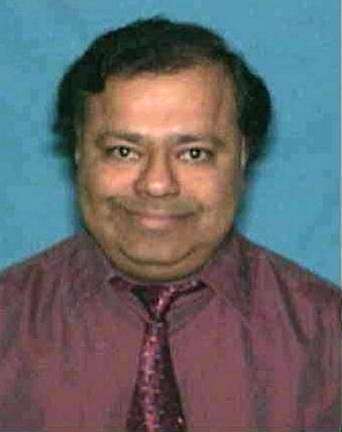


Recent Comments