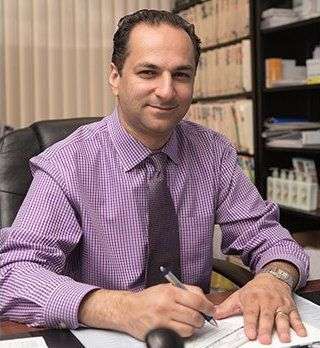
Doctors Name: Arjang Naim
License Number: 74735
License Status:
Current - (Dues Paid)
Limits on Practice
Probation
City of Record: Los Angeles
Region: Los Angeles
License issued on: 05/31/2001
Licensing Boards: Medical
Specialties :
Gender: Male
Accusations and Infractions or Causes for Discipline:
Failure To Maintain Adequate Records
Unprofessional Conduct
Repeated Negligent Acts
Gross Negligence
Date of Last MBC Action: 10/10/2018
Repeat Offender:
No
Ongoing Discipline:
Yes
Out of State Discipline:
No
No Medical Board Activity:
_____________________________________________________________________________________________________
Medical Board Documents, News Articles, Court Documents, Etc.
| Lawsuit 3/20/2017 | |
| Article: TV Judge Glenda Hatchett's son suing over alleged wrongful death of his wife who died hours after giving birth 5/13/2017 | |
| Article: Judge Hatchett's son files lawsuit against Cedars Sinai for wrongful death of his wife 5/18/2017 | |
| Accusation 10/26/2017 | |
| First Amended Accusation 2/21/2018 | |
| +Decision 10/10/2018 | |
______________________________________________________________________________________________________
Additional Information (Medical School, Dated Actions, Excerpts from Disciplinary Actions, Notes) MOUNT SINAI SCHOOL OF MEDICINE OF NEW YORK UNIVERSITY- 10/10/2018—FOUR YEARS PROBATION WITH VARIOUS TERMS AND CONDITIONS. RESTRICTIONS: PROHIBITED FROM TRAINING INTERNS, RESIDENTS, OR FELLOWS; AND SUPERVISING PHYSICIAN ASSISTANTS AND ADVANCED PRACTICE NURSES.
- 2/21/2018—FIRST AMENDED ACCUSATION FILED.
- 10/26/2017—ACCUSATION FILED.
Excerpt from Accusation dated 10/26/2017:
FIRST CAUSE FOR DISCIPLINE
(Gross Negligence-Patients 1, 3, 4, and 5)
7. Respondent Arjang Naim, M.D., is subject to disciplinary action under Code section 2234, subdivision (b), in that he was grossly negligent with respect to the care and treatment of patients 1, 3, 4, and 5. The circumstances are as follows:
Patient 1
7. On or about April 12, 2016, Respondent performed a Cesarean section on K.D., a then 39-year-old female with a prior Cesarean section. The surgery began at 2:31 p.m. and ended 17 minutes later, at 2:48 p.m., Respondent subsequently left the hospital and entrusted K.D.'s care to the obstetrics and gynecology ("OB/GYN") residents. Respondent was the attending physician and the residents' direct supervisor.
8. Beginning at approximately 4:40 p.m., the OB/GYN house staff (i.e., the residents) and nursing personnel began observing, responding to, and documenting concerning signs of abdominopelvic blood loss. Residents were called to K.D.'s bedside to evaluate her for blood noted in the Foley catheter.
9. At approximately 4:54 p.m., Dr. K.W. (a second-year resident) evaluated K.D. for blood-tinged urine in the Foley catheter, a blood clot the size of a half dollar, and a tender abdomen.
10. At approximately 5:24 p.m., Dr. N.E. (a second-year resident) evaluated K.D. for a rising fundus and concern for excessive bleeding. The Foley catheter was draining bright red. She telephoned Respondent to discuss K.D.'s condition. The plan was to keep the Foley catheter in its original place, but no other change to the plan of care was made.
11. At approximately, 5:45 p.m., Dr. K.W. and Dr. S.M. (a fourth-year resident) re-assessed K.D. The Foley catheter was changed in the event that the original catheter had become obstructed by a clot. After the original Foley catheter was replaced, the new one was draining complete red blood, No urine was draining in the Foley catheter. A 6-7 cm mass between the bladder and the anterior uterus was palpable during a pelvic exam. Dr. S.M. telephoned Respondent to discuss K.D.'s condition and plan of care.
12. Accordingly, prior to 6:00 p.m., K.D.'s pulse rate had exceeded her systolic blood pressure, she had frank blood in two different Foley catheters, and she made no urine after 5:00 p.m. (until at least 6:30 p.m.). K.D. had developed a 6-7 cm mass between the bladder and the anterior uterus which was palpable during a pelvic The OB/GYN house staff and nursing personnel continued to observe, respond to, and document concerning signs of abdominopelvic blood loss.
13. At approximately 7:13 p.m., Dr. K.S., a Maternal Fetal Medicine fellow, acting as the OB/GYN attending staff, evaluated K.D. after being notified of the patient's status during evening rounds. An ultrasound was repeated. Dr. K.S. explained to K.D. and her husband that it appeared K.D. had a hematoma anterior to the uterus, which seemed stable, but it was concerning that there was blood in the Foley catheter with little to no urine output. Her plan was to order imaging of the pelvis and lower urinary tract, order a repeat ultrasound to evaluate the clot, repeat labs, and watch K.D. closely.
14. By approximately 8:00 p.m., the signs of significant concealed blood loss were even more apparent. Dr. S.C. (a fourth-year resident) evaluated the patient. K.D.'s pulse rate continued to exceed her systolic blood pressure, her hemoglobin dropped to 7.6, and she was severely oliguric and anuric (for more than ninety minutes) with frank blood previously coming out of the Foley catheter. Those signs were consistent with massive blood loss and coagulopathy. Although that is not their only cause, it must be foremost in an OB/GYN's mind, and of the highest priority/urgency, to promptly evaluate and aggressively manage for the possibility of massive concealed hemorrhage until that possibility is excluded.
15. Dr. S.C.'s plan was to proceed with two units of packed red blood cells, check the Complete Blood Count ("CBC") and Basic Metabolic Panel after the transfusion, and proceed with a computed tomography ("CT") program to evaluate the kidneys, ureters, and bladder given the frank blood in the Foley catheter. She discussed her plan with Respondent and Dr. K.S., the Maternal Fetal Medicine fellow.
16. At approximately 8:07 p.m., Dr. S.C. obtained permission from K.D. for a blood transfusion. The resident discussed the risks and benefits with her.
17. Respondent returned to the hospital. At approximately 8:47 p.m., he was at K.D.'s beside. At approximately 8:57 p.m., he evaluated K.D. and wrote a progress note noting, among other things, that she had bloody urine, possible hematoma/stable, and low urine output. His plan was to give two units of packed red blood cells, consider a CT urogram, and re-evaluate the Foley catheter position. Respondent subsequently left the hospital and K.D.'s care in the hands of the residents and Maternal Fetal Medicine fellow.
18. At approximately 11:25 p.m., Dr. S.C. telephoned Respondent and notified him about a concern for active internal bleeding. He was noted to be "en route." K.D. gave permission for a laparotomy and possible hysterectomy.
19. At approximately 11:42 p.m., Respondent arrived at K.D.'s bedside and evaluated her condition. Respondent wanted to continue the expectant management plan. In contrast, Drs. K.S. and S.C. recommended taking the patient back to the operating room for a laparotomy to identify the source of bleeding. When Respondent expressed a desire to continue with the expected management plan, the obstetric in-house team of physicians considered utilizing the chain of command to supersede Respondent's reluctance to proceed directly and promptly to an exploratory laparotomy.
20. Respondent wanted to repeat a CBC rather than directly open K.D.'s abdomen. Although the CBC may have made a difference of approximately fifteen minutes, the housestaff and nursing personnel had been observing and responding to concerning signs of abdominopelvic blood loss before 6:00 p.m. (six hours earlier). Although Respondent did not necessarily need to re-operate by 6:00 p.m., he should have become, at or by 6:00 p.m., deeply concerned and directly involved with the ongoing frequent regular assessment of K.D.'s condition. But for his occasional progress note and/or telephone contact, Respondent was inadequately involved in K.D.'s care and treatment.
21. Respondent believed K.D. looked reasonably well and stable. K.D.'s condition is more a testament of her robust physiologic resilience rather than to her actual clinical condition and intravascular volume status. That "illusionary effect" has been ascribed to youth and the physiologic adaptations of pregnancy. Respondent allowed himself to become lulled into a false sense of security by such compensatory mechanisms.
22. Respondent missed approximately four to six hours of opportunity during which K.D.'s condition was clearly compromised, and was further deteriorating, but during which he failed to recognize and under-responded to K.D.'s deteriorating condition and clearly suggestive signs of ongoing concealed surgical site hemorrhage.
23. On or about April 13, 2016, at approximately 12:25 a.m., K.D. was transported to the operating room for the exploratory laparotomy and evaluation of the hematoma and evaluation of the hematoma and hemoperitoneum.
24. At approximately 1:15 a.m., Respondent called consultant surgeons. He also engaged the services of the trauma surgery team and a GYN oncologist.
25. By 1:15 a.m., K.D. had experienced cardiac arrest and was undergoing a massive blood product transfusion protocol. Approximately 3 liters of blood had been removed from her abdominopelvic cavity. She was very unstable and had another cardiac arrest. A hysterectomy procedure had been initiated but could not be completed since the patient continued to have more cardiac arrests.
26. Respondent did not actively engage consultant surgeons until after midnight. By then, K.D.'s demise was unpreventable, even in the most expert of hands. A staff surgical consultant would have offered an advantage in being able to communicate staff-to-staff with Respondent to influence and persuade him to operate sooner. In contrast, the obstetrical housestaff who were tending to K.D. were trainees under Respondent's attending staff status and supervision and had their hands tied. The maternal fetal medicine specialist was a fellow still in training.
27. At approximately 2:20 a.m., K.D. was pronounced dead.
28. Respondent was grossly negligent as follows:
A. Respondent failed to timely, sufficiently, and attentively evaluate and manage the possibility of K.D.' s ongoing concealed hemorrhage throughout the evening of April 12, 2016.
29. Respondent's acts and/or omissions as set forth in paragraphs 7 through 28, inclusive above, whether proven individually, jointly, or in any combination thereof, constitute grossly negligent acts pursuant to section 2234, subdivision (b), of the Code. Therefore, cause for discipline exists.
30. Respondent is subject to disciplinary action under Code section 2234, subdivision (c), in that he engaged in repeated negligent acts in the care and treatment of K.D. The circumstances are as follows:
31. The facts and circumstances are as set forth in paragraphs 7 through 28 above, and are incorporated by reference.
32. Respondent engaged in repeated negligent acts as follows:
A. Respondent failed to timely, sufficiently, and attentively evaluate and manage the possibility of K.D.'s ongoing massive concealed hemorrhage throughout the evening of April 12, 2016; and
Patient 3
30. On or about August 21, 2015, Respondent gave Patient 3, a then thirty-year-old female, a single dose of methotrexate for presumed ectopic pregnancy. Her quantitative Beta Human Chorionic Gonadotropin ("HCG") was 28,665 mIU/mL. There had been no visualized ectopic or intrauterine pregnancy on an ultrasound done at that time.
31. On or about August 24, 2015, at approximately 3:56 p.m., Patient 3 arrived at the hospital's emergency room in hemorrhagic shock. She was approximately 11 weeks pregnant, with increased pain. Her blood pressure was 82 systolic and she appeared pale and was perspiring profusely. An ultrasound showed she had free fluid in the abdomen. She was hemodynamically unstable. She was admitted to Respondent's care for an emergency exploratory laparotomy and right salpingectomy.
32. Respondent found a ruptured right Fallopian tube. Patient 3 had an estimated blood loss of 2,000 mL during the surgery, consisting mostly of hemoperitoneum. She required a transfusion of six units of blood in order to stabilize her in the immediate perioperative and intraoperative period.
33. After the operation, Patient 3 had persistent tachycardia. The OB/GYN house staff were concerned that she had a possible pulmonary embolism. Respondent and the house staff decided not to pursue the workup further. Patient 3 had very low urine output and low hemoglobin/hematocrit values. They considered additional blood transfusion therapy. The OB/GYN house staff authored virtually all of the inpatient orders and physician-generated progress notes concerning Patient 3's life-threatening hemorrhage.
34. Throughout the three days following Patient 3's surgery, Respondent failed to personally evaluate her daily, directly, and independently in the hospital. There is no indication that he personally saw her on a daily basis during the three days following her surgery.
35. Respondent was grossly negligent with respect to the care and treatment of Patient 3 as follows:
A. On or about August 21, 2015, Respondent administered methotrexate to Patient 3, as medical management of a presumed ectopic pregnancy, in the face of a quantitative Beta HCG level in excess of 28,000 mIU/mL and a highly suspect ectopic pregnancy.
B. On or about August 24, 2015, through on or about August 27, 2015, Respondent failed to personally evaluate Patient 3 daily, directly, and independently during her postoperative inpatient care.
Patient 4
36. On or about March 14, 2016, at approximately 8:00 p.m., Patient 4, a then thirty-four-year-old female, was admitted to the hospital. She was 16 weeks and four days pregnant. She was in her fifth pregnancy. She had pre-viable preterm premature rupture of membranes. After being informed of her options, Patient 4 chose to receive a high dose Cytotec to induce labor.
37. On or about March 15, 2016, Patient 4 delivered a non-viable fetus, but the placenta did not pass. As a result, she was given three doses ofHemabate 250 mcg and one dose of Cytotec 800mcg. Approximately four hours passed since Patient 4 delivered the fetus, but the placenta had still not passed. At approximately 4:50 a.m., an OB/GYN housestaff (a fourth-year resident) performed a dilation and curettage. Respondent was present for and participated in the entire procedure.
38. Approximately eight hours after the dilation and curettage, Patient 4's vital signs deteriorated. She became acutely pale with tachycardia and had worsening abdominal pain/distention. On or about March 15, 2016, at approximately 11:22 a.m., Patient 4 underwent an emergency exploratory laparotomy and uterine repair. Her uterus had ruptured along a prior vertical uterine incision. Two liters of hemoperitoneum and a small amount of retained products of conception were noted. Patient 4 received a blood transfusion during and after the surgery. Her postoperative course was uncomplicated.
39. Throughout the three days following Patient 4's surgery, Respondent failed to personally evaluate her daily, directly, and independently at the hospital. There is no indication that he personally saw her on a daily basis during the three days following her surgery. There were no progress notes authored by Respondent, the sole attending staff OB/GYN provider during Patient 4's hospitalization.
40. Respondent was grossly negligent with respect to the care and treatment of Patient 4 as follows:
A. On or about March 15, 2016,"through on or about March 18, 2016, Respondent failed to personally evaluate Patient 4 daily, directly, and independently during her postoperative inpatient care.
Patient 5
41. On or about October 2, 2015, Respondent began providing prenatal care to Patient 5, a then thirty-three-year-old female. She was 9 weeks pregnant with her second child. Her first child had been delivered via Cesarean section. Her estimated due date was June 1, 2016. Respondent saw Patient 5 for approximately eleven visits. The last prenatal visit was on May 24, 2016. Respondent's handwritten entries in his medical record for Patient 5 are illegible and cursory. The fetal heart rate at each prenatal care visit was absent or illegible.
42. Respondent scheduled Patient 5 for a Cesarean section for May 26, 2016 (at 39 weeks of pregnancy). However, Patient 5 did not want to undergo a repeat Cesarean section and did not show up for the surgery. Respondent rescheduled the Cesarean section for June 2, 2016.
43. However, on or about May 31, 2016, Patient 5 went to the hospital. An ultrasound showed that she was pregnant with one fetus in the breech presentation. It further showed an anterior (location of placenta previa) placenta previa with placental lacunae (vascular spaces) suspicious for placenta accreta. A repeat Cesarean section with preparations in place for massive transfusion and hysterectomy were recommended. Patient 5 agreed to undergo a Cesarean hysterectomy. Respondent was the primary attending surgeon for the Cesarean section.
44. Respondent delivered the baby, but his attempt to deliver the placenta was unsuccessful. The uterus was taken out ofthe abdominal cavity and the placenta was delivered, except for a 4-5 cm area of suspected accreta. The area of suspected accreta was manually removed. While the uterus was being sutured, Patient 5 became pulseless. Chest compressions helped return her heartbeat to normal. Further evaluation revealed that she had lost an additional occult liter of blood. Her vitals were deteriorating. A decision was made to do the hysterectomy. A GYN oncologist was the primary attending surgeon for the hysterectomy, and Respondent was an assistant. After the procedure, Respondent did not participate in the patient's hospital care.
45. Respondent was grossly negligent with respect to the care and treatment of Patient 5 as follows:
A. Respondent's prenatal care and management of Patient 5 is an extreme departure from the standard of care. He failed to identify, address, and manage any and all high-risk factors which complicated Patient 5's pregnancy, either as preexisting or new-onset conditions. There is no indication that Respondent recognized, planned for, or counseled the patient about the possibility of placenta accreta and its potential attendant consequences (e.g., major bleeding and possible hysterectomy) when the likelihood of that potential life-threatening possibility was approximately ten percent or more, given her history of a prior Cesarean section in the face of current anterior placenta previa. As a result, he failed to recognize the indication to schedule Patient 5 for a Cesarean section at 34 weeks of pregnancy. Respondent also failed to schedule Patient 5 for Cesarean delivery at 36-37 weeks of pregnancy based upon his well-documented awareness of placenta previa. Furthermore, Respondent's prenatal medical records for Patient 5 mention schizophrenia, history of prior Cesarean delivery, persistent breech presentation, uterine myoma(fibroid), placenta previa, patient desires trial of labor after Cesarean, and bleeding in early pregnancy. However, there is no indication that Respondent addressed each of these issues in sufficient detail.
46. Respondent's acts and/or omissions as set forth in paragraphs 8 through 45, inclusive above, whether proven individually, jointly, or in any combination thereof, constitute grossly negligent acts pursuant to Code section 2234, subdivision (b), with respect to the care and treatment of patients 1, 3, 4, and 5. Therefore, cause for discipline exists.
SECOND CAUSE FOR DISCIPLINE
(Repeated Negligent Acts-Patients 1, 2, 3, 4, 5, and 6)
Patient 1
47. Respondent Arjang Nairn, M.D. is subject to disciplinary action under Code section 2234, subdivision (c), in that he engaged in repeated negligent acts with respect to the care and treatment of patients 1, 2, 3, 4, 5, and 6. The circumstances are as follows:
48. The facts and circumstances are as set forth in paragraphs 8 through 29 above, and are incorporated by reference.
49. Respondent departed from the standard of care with respect to his care and treatment of Patient 1 as follows:
A. Respondent failed to timely, sufficiently, and attentively evaluate and manage the possibility of Patient 1's ongoing massive concealed hemorrhage throughout the evening of April 12, 2016; and
B. Respondent failed to timely engage the services of consultant physicians and surgeons
during the post-operat1ve phase of Patient 1's care.
Patient 2
50. On or about May 25, 2016, Patient 2, a then twenty-seven-year-old female, went to the hospital's emergency department with a three-day history of right-sided pelvic pain. She was admitted to Respondent's care with a presumptive diagnosis of ectopic pregnancy, at nine weeks plus five days' pregnancy. Respondent managed the ectopic pregnancy with single-dose methotrexate. Patient 2's pain improved and an abdominal exam continued to show a non-surgical abdomen.
51. On or about May 26, 2016, Patient 2 was discharged in stable condition with instructions to follow up on day four (May 29, 2016) and day seven (June 1, 2016) in the emergency room.
52. Respondent departed from the standard of care with respect to his care and treatment of Patient 2 as follows:
A. Respondent's documentation of Patient 2's hospital course was inadequate. Although Respondent was the sole attending staff provider during the hospitalization and was involved in the actual clinical decision-making, he did not author any ofthe physician-generated notes. As the staff physician, he should have done more than edit or co-sign the OB/GYN house staffs notes.
Patient 3
53. The facts and circumstances are as set forth in paragraphs 30 through 35 above, and are incorporated by reference.
54. Respondent departed from the standard of care with respect to his care and treatment of Patient 3 as follows:
A. On or about August 21, 2015, Respondent administered methotrexate to Patient 3, as medical management of a presumed ectopic pregnancy, in the face of a quantitative Beta HCG level in excess of28,000 mIU/mL and a highly suspect ectopic pregnancy.
B. On or about August 24, 2015, through on or about August 27, 2015, Respondent failed to personally evaluate Patient 3 daily, directly, and independently during her postoperative inpatient care.
C. Respondent's documentation of Patient 3's hospital course was inadequate. Although he was the sole attending staff provider during the hospitalization, Respondent did not author any progress notes. He only authored a few orders. As the staff physician, he should have done more than edit or co-sign the house staffs notes. In light of Patient 3's critical and life-threatening condition upon admission, and her stormy postoperative course, Respondent's direct involvement and documentation was vital.
Patient 4
55. The facts and circumstances are as set forth in paragraphs 36 through 40 above, and are incorporated by reference.
56. Respondent departed from the standard o f care with respect to his care and treatment of Patient 4 as follows:
A. On or about March 15, 2016, through on or about March 18, 2016, Respondent failed to personally evaluate Patient 4 daily, directly, and independently during her postoperative inpatient care.
B. Irrespective of who performed the dilation and curettage procedure, Respondent was the staff OB/GYN solely responsible for the surgical procedure in the teaching/clinical setting such as at the hospital's OB/GYN Department. Respondent's surgical procedure/technique in performing/supervising Patient 4's dilation and curettage constitutes a departure from the standard of care. There is documentation that the OB/GYN house staff used a 12 mm suction curette. However, there is no documentation that he used sequential gentle sharp curettage as a means to assess for any retained products of conception and/or to assure complete evacuation.
C. Respondent's documentation of Patient 4's hospital course was inadequate. Although Respondent was the sole attending staff provider during Patient 4's hospitalization, he did not author any of the physician-generated notes. As the staff physician, he should have done more than edit or co-sign the house staff's notes. Given the importance of several critical decision points in Patient 4's management and care (e.g., medical versus dilation and evacuation management, and the acuity of Patient 4's life-threatening condition after her dilation and curettage), direct involvement and documentation by the staff physician is all the more vital at or around such points (but not limited to such points) in Patient 4's inpatient care.
Patient 5
57. The facts and circumstances are as set forth in paragraphs 41 through 4S above, and are incorporated by reference.
58. Respondent departed from the standard of care with respect to his care and treatment of Patient 5 as follows:
A. Respondent's prenatal care and management of Patient Sis a departure from the standard of care. He failed to identify, address, and manage any and all high-risk factors which complicated Patient S's pregnancy; either as preexisting or new-onset conditions. There is no indication that Respondent recognized, planned for, or counseled the patient about the possibility of placenta accreta and its potential attendant consequences (e.g., major bleeding and possible hysterectomy) when the likelihood of that potential life-threatening possibility was approximately ten percent or more, given her history of a prior Cesarean section in the face of current anterior placenta previa. As a result, he failed to recognize the indication to schedule Patient 5 for a Cesarean section at 34 weeks of pregnancy. Respondent also failed to schedule Patient 5 for Cesarean delivery at 36-37 weeks of pregnancy based upon his well-documented awareness of placenta previa. Furthermore, Respondent's prenatal medical records for Patient 5 mention schizophrenia, history of prior Cesarean delivery, persistent breech presentation, uterine myoma (fibroid), placenta previa, patient desires trial of labor after Cesarean, and bleeding in early pregnancy. However, there is no indication that Respondent addressed each of these issues in sufficient detail.
B. Respondent's documentation and medical record keeping of Patient 5's prenatal care was inadequate. His documentation in her medical records, throughout her prenatal care, was cursory and illegible. In light ofthe details, nature, clinical features, and several important decision points in Patient 5's prenatal care/management (e.g. options for management after previous Cesarean delivery; anterior placenta previa in the face of a prior Cesarean delivery; and breech presentation), direct and vigilant attention to detail and documentation by the staff obstetrician is all the more vital at/around such points (but not limited to such points) in Patient 5's prenatal care. Particularly lacking is Respondent's d9cumentation of his consideration of placenta accreta.
Patient 6
59. On or about September 15, 2015, Respondent saw Patient 6, a then thirty-seven-year-old female who was pregnant with twins. Her estimated due date was October 13, 2015. She received prenatal care in Iran, but she did not provide copies of her prenatal medical records to Respondent.
60. On or about September 22, 2015, Patient 6 went to the hospital for a scheduled Cesarean section. She was 37 weeks pregnant. Respondent performed the Cesarean section for a vertex (head first)/breech twin delivery. On September 23, 2015, and September 24, 2015, Respondent evaluated Patient 6 and wrote progress notes in her medical record. His plan was for her to be discharged from the hospital on September 25, 2015. However, on September 25, 2015, the day of Patient 6's discharge, Respondent did not evaluate her or write a progress note. After she was discharged, Patient 6 remained in the hospital until September 26, 2015, presumably as a boarder.
61. Respondent departed from the standard of care with respect to his care and treatment of Patient 6 as follows:
A. On or about September 22, 2015, Respondent maintained inadequate medical records for Patient 6 for the prenatal/preoperative period. His transcribed preoperative History and Physical was inadequate. He did not address any of the salient clinical concerns inherent in multifetal pregnancies. He did not mention, address, or treat a positive chlamydia test result. He did not document a preoperative physical examination. Of the standard prenatal care laboratory tests that had been reported, he did not address the majority. In the absence of prenatal records having been provided to Respondent, it was unfounded for him to indicate that "OB care in Iran. All being within normal limits." He did not prepare a handwritten History and Physical that . would have met the standard of care.
B. On or about September 25, 2015, the day Patient 6 was discharged, Respondent failed to evaluate her and write a progress note.
62. Respondent's acts and/or omissions as set forth in paragraphs 48 through 61, inclusive above, whether proven individually, jointly, or in any combination thereof, constitute repeated negligent acts pursuant to Code section 2234, subdivision (c), with respect to the care and treatment of patients 1, 2, 3, 4, 5, and 6. Therefore, cause for discipline exists.
THIRD CAUSE FOR DISCIPLINE
(Inadequate and Inaccurate Medical Recordkeeping-Patients 2, 3, 4, 5; and 6)
63. Respondent Arjang Nairn, M.D. is subject to disciplinary action under Code section 2266 in that he failed to maintain adequate and accurate medical records with respect to the care and treatment of patients 2, 3, 4, 5, and 6. The circumstances are as follows:
64. The facts and allegations in Paragraphs 7 through 62, above, are incorporated by reference and re-alleged as if fully set forth herein.
65. Respondent's acts and/or omissions as set forth in paragraph 64, inclusive above, whether proven individually, jointly, or in any combination thereof, constitute inadequate and inaccurate record keeping pursuant to Code section 2266 with respect to the care and treatment of patients 2, 3, 4, 5, and 6. Therefore, cause for discipline exists.
FOURTH CAUSE FOR DISCIPLINE
(Unprofessional Conduct-Patients 1, 2, 3, 4, 5, and 6)
66. Respondent Arjang Nairn, M.D. is subject to disciplinary action under Code section 2234 for unprofessional conduct with respect to the care and treatment of patients 1, 2, 3, 4, 5, and 6. The circumstances are as follows:
67. The facts and circumstances are as set forth in paragraphs 7 through 65, above, and are incorporated by reference.
68. Respondent's acts and/or omissions as set forth in paragraph 67, inclusive above, whether proven individually, jointly, or in any combination thereof, constitute unprofessional conduct pursuant to Code section 2234 with respect to the care and treatment of patients 1, 2, 3, 4, 5, and 6. Therefore, cause for discipline exists.
#PatientDeath
#MaternalDeath
#TVJudge
______________________________________________________________________________________________________